Comment

Montreal man scrubs away anti-Semitism

(photo: courtesy)

(photo: courtesy)

By Renee Ghert-Zand - May 13, 2015

Originally appeared here in the Times of Israel 

Standing at a burly 6’2″ and sporting a shaved head, cool shades and a black vest, Corey Fleischer looks like an action film hero as he moves around Montreal. His fight is against the bad guys who paint hateful graffiti on public and private property, and his weapon is a power washing wand.

Fleischer simply cannot turn a blind eye to the anti-Semitic, anti-gay and racial slurs and symbols he sees all over. The owner of a power washing company he opened after graduating from university with a women’s studies degree, he dedicates many hours of his personal time to removing the markings.

For the past five years, Fleischer has been on a one-man mission to rid Canada’s second-largest city of visual hate speech. But with word having gotten out in the media about what he’s been doing, demand for his services has risen dramatically in recent months. What started as a sort of hobby for Fleischer has turned into an extensive undertaking that will require more manpower, not to mention water pressure.

As a result, Fleischer is trying to develop a cadre of like-minded people to fight the blight wrought by spray paint can-wielding bigots. He’s launched a fundraising and awareness campaign with the aim of creating a network of hate graffiti removers across Canada. Read More

Comment

Comment

Injured Syrians find treatment in Israel

(photo: CNN)

(photo: CNN)

By Oren Liebermann - May 11, 2015

Originally appeared here on CNN.com

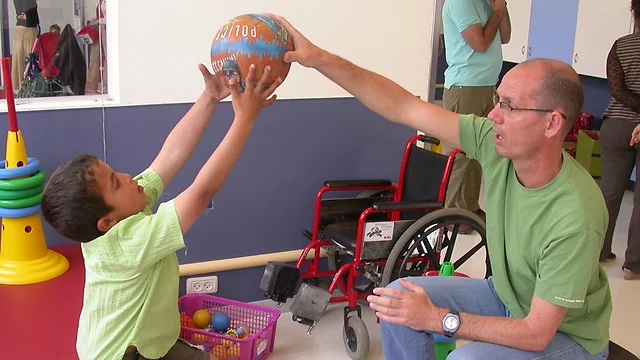
The scars of surgery run all the way down Jamal's left leg.

He struggles to walk, requiring crutches that he is still learning to use. A bulky metal brace still holds his lower left leg together. It clanks on the ground as he makes his way down the hallways of the hospital.

Jamal has been through hell. He is 7 years old. And he has come out smiling.

His family is from war-torn Syria. A rocket destroyed his leg, scarring his skin. His mother says she thought he would die.

"He needed nine packs of blood that they didn't have," she says of the medical facility in Syria. "He went into a coma for 20 days as a result."

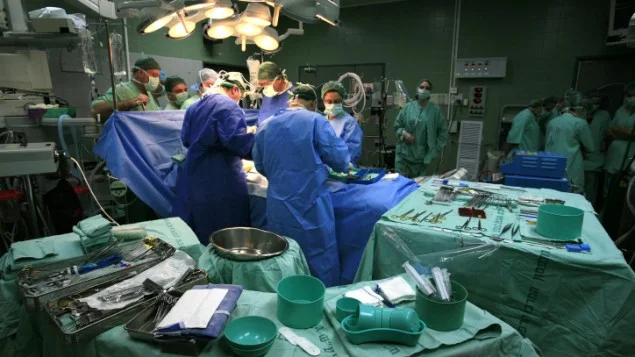
Eighteen surgeries later, Jamal is recovering after treatment at Ziv Medical Center in northern Israel, one of a group of hospitals that has treated nearly 2,000 injured Syrians over the last two years. Read More

Comment

1 Comment

Israel treats 4-year-old Gaza patient

(photo: screenshot Ynetnews video)

(photo: screenshot Ynetnews video)

By Matan Tzuri - May 10, 2015

Originally appeared here in Ynetnews

Yara from Gaza was transferred to Israel for medical treatment after she was injured in a car accident in the strip. Three months later she has managed to surprise hospital staff at the Barzilai Medical Center in Ashkelon by starting to walk just a few days after she was given a prosthetic leg.

Now released from the hospital, Yara can walk and even learned Hebrew during her time in the Israeli hospital. Back in Gaza, Yara was reunited with her parents for the first time since she left to get treatment in Israel.

The accident happened three months ago, near the young girl's home in the Tuffah district in Gaza City. Yara and 15 other children had been playing near a main road when a truck that passed by did not notice the children and ran into Yara.
 
Within minutes, she was taken to Shifa Hospital in Gaza where she underwent several operations. When the doctors were unable to mend her leg they amputated it, which led to a state of necrosis – worsening her condition.
 
The hospital in Gaza did not have the means to take care of Yara which led her parents to request the Hamas authority to give her permission to get medical care in Israel.
 
After a long wait, and many objections, Hamas finally gave their permission to transfer to Yara to Israel, but her parents were told they would have to wait in Gaza. Instead, Hamas allowed the young girl's cousin to accompany her. Read More

1 Comment

Comment

Arab who is a diplomat for Israel

By Josh Jackman - May 7, 2015

Originally appeared here in TheJC.com

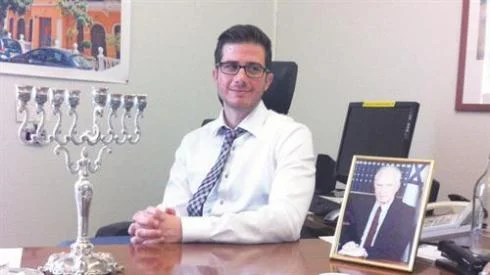
George Deek is different from most Israeli diplomats. The country’s foreign ministry is full of high-flyers snapped up at a young age, but very few are Arabs.

Mr Deek, who joined the diplomatic corps at the tender age of 25, sees no contradiction in someone with Arab roots representing Israel.

“At 14, I went to a Jewish school and as the only Arab in my class I became the voice of the Palestinians. But just like my classmates were listening to me, I was also listening to them.

“It felt natural to speak up for Arabs but it felt natural to speak up for Jews. We share common fears and goals,” he said.

The envoy, who is deputy ambassador to Norway, made his first official visit to London last week where he was guest of honour at the first annual reception of pro-Israel grassroots group StandWithUs UK. Read More

Comment

Comment

Lebanese MadMen dining in Tel Aviv

(photo: ZOUBISOU)

(photo: ZOUBISOU)

By Ariel Cohen, Elia Berger - May 7, 2015

Originally appeared here in The Jerusalem Post

Zou Bisou, a happening cocktail bar on central Tel Aviv’s Ben Yehuda Street, is spicing up their repertoire by hosting celebrity guest chefs and having theme nights.

The first of the annual “concept nights” showcased Lebanese chef Kamel Hashalmon cooking up his home cuisine. Each month will feature a different Arab sous chef, bringing his or her own cuisine to the Tel Aviv culinary scene. Additionally, the concept nights are done in conjunction with Heineken Premium beer. 

"As a brand capital premium carrier in the world, we at Heineken aim to introduce marketing innovations and breakthroughs to the Israeli public," Heineken marketing director Nir Gal said. “Adventures in the world of culture, art and culinary, further activities of Heineken...we aim to continue to lead in quality and innovation and this time we were able to bring our customers to the front beer and culinary world."

The bar had a 1960s atmosphere that could only be described as Mad Men-esque. Read More

Comment

Comment

Israel Criticized for Helping Nepal Earthquake Victims

(photo: Menahem Kahana/AFP/Getty Images)

(photo: Menahem Kahana/AFP/Getty Images)

By Joel Himelfarb - May 6, 2015

Originally appeared here in Newsmax

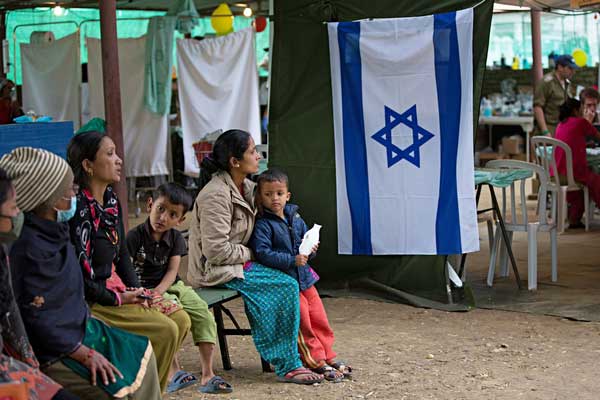
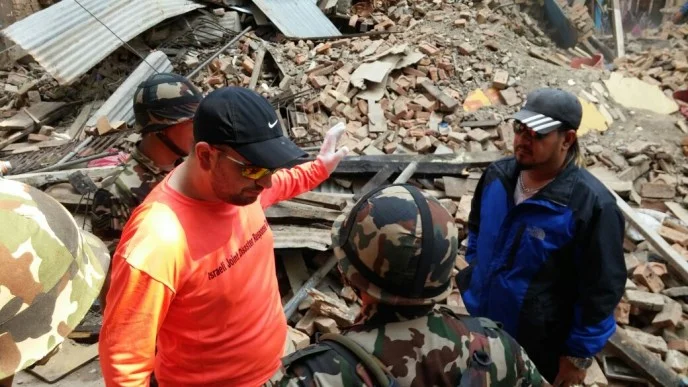
Last week, the Israel Defense Forces sent 260 doctors, nurses and search-and-rescue personnel to Nepal to aid that nation's earthquake relief efforts.

Most people, regardless of their position on the Israeli-Palestinian conflict, would probably regard that as a positive development.

But Kenneth Roth, executive director of Human Rights Watch, views the Israeli humanitarian help in a darker light.

Steven A. Cook, a senior fellow of the Council on Foreign Relations, writes in Newsweek that Roth used a report about Israeli aid to Nepal to attack the Jewish state's treatment of the Palestinians.

"Easier to address a far-away humanitarian disaster than the nearby one of Israel's making in Gaza!" Roth tweeted.

Cook wrote that he was surprised that Roth "seems so blithely unaware of just how difficult it actually is to address the humanitarian situation in Gaza." Read More

Comment

Comment

450 treated, 5 births at IDF hospital in Nepal

(Photo: IDF Spokesperson via FLASH90)

(Photo: IDF Spokesperson via FLASH90)

By Abigail Klein Leichman - May 3, 2015

Originally appeared here in Israel21c

Even as some Israeli rescuers have finished their work in Nepal and are landing at home today, many are still working to find and treat victims of the April 25 earthquake that killed some 7,000 people and wounded about 13,000.

Rescue and relief organizations from Israel have assisted in dramatic rescues. IsraAID personnel led a 10-hour effort by search-and-rescue teams from France, Norway and Nepal to reach Krishna Devi Khadka, a 24-year-old maid trapped in a hotel for five days in an air pocket covered by a corpse.

“When the young woman was finally extracted and carried away to a waiting ambulance, it was to the great relief of the large crowd that had gathered, bringing hope that others may yet be alive,” reports IsraAID founder and director Shachar Zahavi.

Nepalese teenager Pemba Lama also was rescued after five days under debris. Like Khadka, he was treated at the Israel Defense Forces’ field hospital, set up on April 29 in Kathmandu. Read More

Comment

Comment

On first day, IDF field hospital in Nepal treats nearly 100, delivers baby

((Photo: AP/Manish Swarup)

((Photo: AP/Manish Swarup)

By Times of Israel Staff and AP - April 30, 2015

Originally appeared here in The Times of Israel 

Israel’s field hospital in earthquake-hit Nepal began operating Wednesday morning, with staff treating nearly 100 patients and delivering their first baby — a boy — on the first day, according to an IDF spokesperson

Among the patients were some 30 Israeli nationals. Most were suffering from dehydration and were soon released to their hotels.

Over 250 doctors and rescue personnel were part of an IDF delegation that landed Tuesday in the Nepalese capital, Kathmandu, in the wake of Saturday’s magnitude-7.8 earthquake that devastated large swaths of the mountainous country, killing at least 5,000 and leaving some 8,000 wounded and tens of thousands seeking shelter and food.

The Israeli group set up the field hospital with 60 beds, including an obstetrics department, and was operating in coordination with the local army hospital.

Of 2,000 Israelis who were in the country when the natural disaster hit, only one remains unaccounted for, even as some were still stranded in far-flung areas of the country, awaiting rescue. Read More

Comment

Comment

How Israeli Desalination Technology Is Helping Solve California’s Devastating Drought

By Betty Ilovici - April 27, 2015

Originally appeared here in NoCamels 

Four years of devastating droughts in California have pushed cities and counties in the Golden State to seriously consider turning to the one drinking source that is not depleting anytime soon – seawater. With the Pacific Ocean abutting their shores, water desalination may be the much-needed solution for Californians. But desalination has its disadvantages, the chief ones being the high costs and the potential environmental damage.

To address these challenges, California is turning to the world leader in cutting edge desalination technology – Israel. A $1 billion desalination project is already underway in San Diego County – which will be the largest seawater desalination plant in the Western Hemisphere – and Israeli engineers have been called in for their expertise.

Currently under construction in Carlsbad, 35 miles north of San Diego, the plant could potentially provide Californians with 54 million gallons of water a day. The plant is using technology Israelis have been using for years, reverse-osmosis, which involves forcing seawater through a film with tiny holes that allow only water molecules to pass through, while the larger salt molecules cannot.

2014 was California’s third driest year in 119 years and according to the US Geological Survey; it was also the warmest year in recorded history, leading California to declare a drought state of emergency last year. Earlier this month, another frightening figure was published: The California Department of Water Resources measured the statewide water content of Sierra snowpack (which provides about one-third of the water used by California’s cities and farms) at 5 percent, the lowest level since 1950. In response, the governor recently announced mandatory State-wide water cutbacks.

Despite this, the Golden State has only a handful of small desalination plants. But with the help of Israel Desalination Enterprises (IDE Technologies), the $1 billion desalination plant San Diego is due to become reality next year. According to IDE – which is also working on desalination projects in China, India and Australia – the Carlsbad project is a “complete game changer for desalination in the US.” This project is expected to provide clean water to 300,000 people and generate roughly $50 million annually for the regional economy. “The plant overcame significant practical, regulatory and economic hurdles to deliver a cost-effective and environmentally friendly water supply,” IDE said. Read More

Comment

Comment

Israeli innovations save lives in Nepal

(Photo: ZAKA)

(Photo: ZAKA)

By Abigail Klein Leichman - April 28, 2015

Originally appeared here in Israel21c

Israeli innovations like the Emergency Bandage and the Pocket BVM, a manual ventilator to assist people who are not breathing, are just two of the technologies that are being put to use in saving lives in earthquake-stricken Nepal.

According to Israeli paramedic Dov Meisel, speaking to ISRAEL21c from Nepal’s badly-damaged capital, Kathmandu, a number of innovative Israeli technologies have been packed into 60 cases of medical and search-and-rescue equipment arriving at Kathmandu today for his 25-member Israeli disaster response team.

“A lot of our equipment is Israeli-made,” said Meisel, a volunteer with Israel’s United Hatzalah voluntary emergency response network and director of international operations for IsraeLife, an umbrella organization for which he is coordinating a joint disaster response team from United Hatzalah, ZAKA and FIRST rescue and recovery nonprofits.

The Emergency Bandage, by First Care Products, has a built-in pressure bar to stop bleeding and was invented by a former combat medic in the Israel Defense Force. It’s been credited for saving lives of US servicemen in Iraq, as well as Arizona Congresswoman, Gabriel Giffords.

In addition to this, the Pocket BVM from MicroBVM, and other blue-and-white supplies, the crew is mapping its activities using a satellite-based smartphone technology created for United Hatzalah, called the NowForce Life Compass. Read More

Comment

Comment

Israeli planes bring home babies born in quake-struck Nepal

(photo: Ben Hartman)

(photo: Ben Hartman)

By Tovah Lazaroff - April 27, 2015

Originally appeared here in The Jerusalem Post

Two planes that carried Israelis rescued from the earthquake in Nepal landed in Israel on Monday.

Five other flights flew to Kathmandu on Monday with Israeli rescue teams, IDF soldiers and medical personnel to help Nepal, which is still devastated by the 7.9 magnitude quake that struck on Saturday, killing over 3,300 people. Since then additional damage has been caused by a series of after shocks.

A small IAF plane was the first carrier to arrive back in Israel from Nepal. It landed at a military base early Monday. On board were a number of wounded Israelis and premature babies of Israeli parents who were born to surrogate Nepalese mothers. 

A Magen David Adom plane with five more babies born to surrogate mothers and their Israeli families landed at Sde Dov Airport at noon on Monday. Over a dozen such babies still need to be airlifted home.

Three IAF Hercules planes left for Nepal on Monday as did two El Al jumbo jets with missions jointly organized by the IDF and the Foreign Ministry. 

The large carriers with 260 personnel on board also transported 95 tons of equipment including a field hospital with a ward for premature babies. Rescuers brought with them cutting equipment, electronic devices to help find victims trapped under the rubble, generators, lighting equipment, and more. Read More

Comment

Comment

‘This is our country, there is no other,’ says teary-eyed Aharish in Arabic

(photo: screen capture: Channel 2)

(photo: screen capture: Channel 2)

By Jonathan Beck - April 22, 2015

Originally appeared here in the Times of Israel

Lucy Aharish, an Israeli-Arab news anchor and actress, was among the 14 torch lighters in the official ceremony kicking off Israel’s celebrations of 67 years of independence on Wednesday night. Almost breaking down at the ceremony, she was the only one of the honorees to give part of her brief address in Arabic.

Aharish, 33, a Muslim Arab whose parents hail from Nazareth but who was educated in Jewish institutions, instantly became a target of far-right criticism when it was announced earlier this month that she had accepted the honor of lighting a torch at the state Independence Day ceremony.

Some left-wing critics said her accepting the honor constituted an agreement to serve as a fig leaf of the government.

From the extreme right — Lehava, a group acting to prevent intermarriage and other integration by non-Jewish citizens in Israeli life — was prevented by the police from protesting against Aharish’s involvement in the event.

The group was planning to demonstrate outside the Mount Herzl cemetery in Jerusalem, where the ceremony took place, but did not receive police approval for the protest.

Aharish was teary-eyed when she took her turn at the ceremony, saying she was lighting the torch “for all human beings wherever they may be who have not lost hope for peace, and for the children, full of innocence, who live on this Earth.

“For those who were but are no more, who fell victim to baseless hatred by those who have forgotten that we were all born in the image of one God. For Sephardim and Ashkenazim, religious and secular, Arabs and Jews, sons of this motherland that reminds us that we have no other place. For us as Israel, for the honor of mankind, and for the glory of the State of Israel,” she said. Read More

Comment

Comment

Nano-bullet tech shoots down brain cancer in Tel Aviv U study

(photo credit: Nati Shohat/Flash90)

(photo credit: Nati Shohat/Flash90)

By David Shamah - April 12, 2015

Originally appeared here in the Times of Israel 

The worst form of brain cancer, glioblastoma multiforme (GBM), is considered largely incurable by doctors. Victims generally die within a year and a half of being diagnosed with the tumors. It’s such a devastating disease that the National Academy of Sciences calls it “the Terminator.” But an innovative nanotech-based “end-run” around cancer cells by Tel Aviv University researchers could provide doctors with a new way to treat – or even cure – GBM and other malignant killer cancers.

The technique, developed by Prof. Dan Peer of TAU’s Department of Department of Cell Research and Immunology and Scientific Director of TAU’s Center for NanoMedicine, has proven itself in the past: It’s based on the “cancer bullet” system Peer and other TAU researchers developed that delivers chemotherapy directly to cancer cells, using bioadhesive liposomes (BALs), consisting of regular liposomes reduced to nano-sized particles that attach themselves to the cancerous cells. Peer and Prof. Rimona Margalit, with whom he developed the method, have published several studies showing its effectiveness.

That research was done on ovarian cancer tumors, and it proved to be effective – but that wasn’t the case when it came to GBM, which is far less responsive to chemotherapy. Prof. Zvi R. Cohen, Director of the Neurosurgical Oncology Unit and Vice Chair at the Neurosurgical Department at Sheba Medical Center at Tel Hashomer Hospital in central Israel, contacted Peer to discuss whether anything could be done for individuals suffering from the aggressive and fatal form of brain cancer. Read More

Comment

Comment

Grandson of Righteous Among the Nations now saves children in Israel

By Itamar Eichner - April 18, 2015

Originally appeared here in Ynetnews

Coss Weber's grandfather and grandmother saved Jews during the Holocaust and were named Righteous Among the Nations. Now, at age 51, Weber lives in Israel and works to save the lives of Israeli children with severe disabilities. On top of that, in order to mark Holocaust Remembrance Day, Weber will embark on a 750 kilometer bike ride, starting at the Bergen-Belson camp, to commemorate his grandfather who died during the war.

Weber, who moved to Israel 26 years ago, begins his journey to honor his grandfather on Holocaust Remembrance Day and will end it on Israel's Independence Day.

The journey will retrace the path that Weber's grandfather took on the "Lost Train" before he died of typhus.
 
The "Lost Train" refers three trains that departed from Bergen-Belsen on April 9, 1945. The trains were intended to take the remaining Jews to gas chambers in Theresienstadt but the trains never arrived due to bombings by the Allied Forces. Read More

Comment

Comment

Israelis find cancer-suppressing proteins in scientific breakthrough

(photo: Shutterstock) 

(photo: Shutterstock) 

By Abigail Klein Leichman - April 14, 2015

Originally appeared here in Israel21c 

A particular protein that defies the cell’s normal system of tagging and banishing defective or no longer needed proteins seems to play a significant role in suppressing malignant growth, according to Israeli researchers.

The study was conducted at the Technion-Israel Institute of Technology in the laboratory of Professor Aaron Ciechanover, who won a Nobel Prize in chemistry in 2004 with colleague Avram Hershko and Irwin Rose of the University of California-Irvine.

Led by Dr. Yelena Kravtsova-Ivantsiv, the research team included students and physicians from Rambam, Carmel and Hadassah medical centers. They found the previously unknown p50 protein  during ongoing research on the ubiquitin system, which rids cells of earmarked proteins by sending them for destruction in the cell’s proteasome area.

They discovered that p105, a long precursor of a key cell regulator called NF-κB, sometimes fails to be completely broken down in the proteasome. In those cases, p105 is only shortened and becomes a protein they dubbed p50.

Using samples of human tumors and models of human tumors grown in mice, they then attempted to decipher the decision-making mechanism that determines whether the tagged p105 gets fully degraded or transformed into p50.

The decision between these two options has important implications. Read More 

Comment

Comment

IsraAID seeks to help Kenya deal with grief management after mass killing

(photo: REUTERS)

(photo: REUTERS)

By Ariel Cohen - April 9, 2015 

Originally appeared here in the Jerusalem Post 

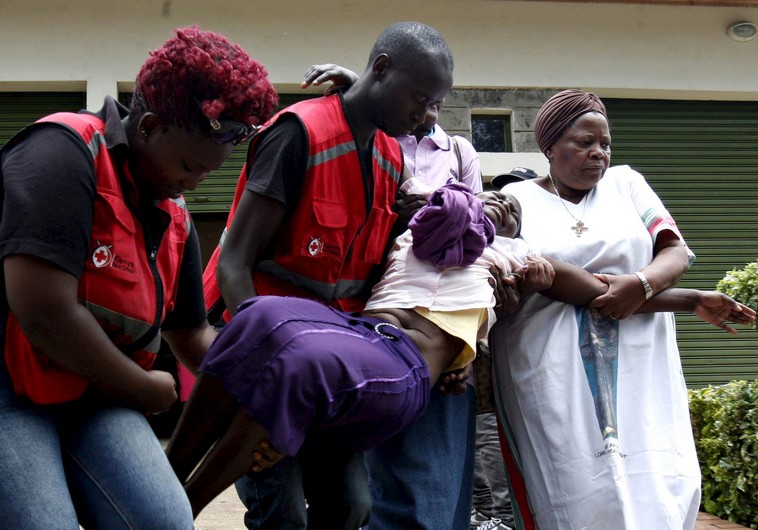
Following the horrific massacre by the radical Muslim terror group al-Shabab from Somalia which killed over 150 Christian students in Kenya, the Israeli relief group IsraAID is helping Kenyan government officials deal with the tragedy.

IsraAID is currently holding discussions with Kenyan government counterparts as well as with the local Kenyan Red Cross and UN officials in hopes of creating a grief and disaster management plan for the government, modeled off the Israeli plan. 

Were basing it on the Israeli model,”  founding director of IsraAID, Sachar Zahavi told The Jerusalem Post. “IsraAIDs focus would be to provide post trauma training and treatment to help the affected community and service providers cope with their grief.” Read More

Comment

Comment

7-year-old Syrian boy tries matzo in Israeli hospital - and loves it

 (Photo: Ziv Medical Center)

 (Photo: Ziv Medical Center)

By Ahiya Raved - April 7, 2015

Originally appeared here in Ynetnews

A wounded Syrian boy hospitalized at the Ziv Medical Center in Safed got to taste matzo for the first time in his life this week - and loved it.

The 7-year-old boy, who suffered serious wounds to his legs from a shell hit seven months ago, enjoyed the matzo so much that he has been asking the hospital's staff to give him matzo to eat at every opportunity he gets.
 
Hospital staff told the boy and his mother about Passover and the holiday's meaning, and the two Syrians found parallels to their own situation in the story of Israel's exodus from Egypt.

In Syria, the boy underwent 17 operations under difficult conditions due to the constant fighting between the Syrian Army loyal to President Bashar Assad and rebels trying to oust him.
 
Syrian doctors told the boy's mother they have done all they could for him, and that he will not be able to walk again. Read More

Comment

Comment

New Jordanian think tank seeks to understand the reality of Israel

(photo: Avi Lewis/Times of Israel)

(photo: Avi Lewis/Times of Israel)

By Avi Lewis - April 6, 2015

Originally appeared here in the Times of Israel 

AMMAN – As Israelis headed to the ballot boxes on March 17, a number of journalists and politicians gathered for a workshop detailing the various political parties, their platforms and campaigns. This pre-election seminar, however, was not held in Hebrew for the disgruntled Israeli voter. It was entirely in Arabic and in the unlikeliest of places — neighboring Jordan

The initiative, among others, was spearheaded by the Amman-based Center for Israel Studies, an independent nonprofit think tank established in late 2014 that seeks to combat media misinformation surrounding the Jewish state and the Israeli-Palestinian conflict by presenting an alternative, neutrality-driven view of Israel in Arabic for Jordan’s decision makers, journalists and wider public.

One of the first of its kind in the Arab world – small Israel-studies circles exist in Egyptian academia — the center hosts lectures, programs, conferences and debates that signal a growing openness to understanding Israeli society amid a post-Arab Spring internet-savvy generation thirsty for a balanced, more objective view of their oft-maligned and misunderstood neighbor west of the Jordan river. Read More

Comment

Comment

Watch Passover from Jerusalem… in 1913!

By Rachel Neiman - April 5, 2015

Originally appeared here in Israel21c

In 1913, delegates to the 11th Zionist Congress in Vienna, Austria were busy discussing settlement activities in Palestine and the work of the organization’s office in Jaffa. Chaim Weizmann — who had in 1912 successfully lobbied for the foundation of the Technion – Israel Institute of Technology — now, together with Jewish National Fund head Menachem Ussishkin, won the support of Congress for the establishment of the Hebrew University in Jerusalem.

The delegates were also treated to a motion picture; an hour-long documentary, The Life of the Jews in Israel, produced by Odessa’s HaMizrah Society and directed by businessman and loyal Zionist Noah Sokolovsky. Following the premiere, the film went on to be enjoy popularity throughout Europe and Russia.

The movie presents the viewer with a portrait of Jewish life in what was then known as Ottoman Palestine, starting with the journey from Odessa to Tel Aviv via the Black Sea, and on through Jerusalem and other cities, villages, and rural settlements. It was filmed over two months that included celebrating the Passover holiday in Jerusalem at the Western Wall. Read More 


Comment

1 Comment

Israel's Haim sisters conquer Arab music world

(photo: Facebook)

(photo: Facebook)

By Viva Sarah Press - March 30, 2015

Originally appeared here on Israel21c

The Haim sisters are rocking the Arab world. No, not the American pop-rock sister act but rather the Israeli siblings Tair, Liron and Tagel. The official release of their music video, Habib Galbi, has propelled them to celebrity status throughout parts of Asia, Europe and the Middle East.

It’s not every day that a Muslim site highlights an Israeli band. But two days after its release, their Habib Galbi clip was chosen “video of the day” on the Mipsterz – Muslim Hipsters Facebook page.

The French media outlet Clique also featured the music video as “clip of the day.”

The singing Israeli Haim sisters front A-WA (pronounced “Ay-wa,” meaning “yes” in Arabic), a band that mixes traditional Yemenite folk songs with modern electronic grooves.

“We wanted to give our roots a modern revamp,” Tair Haim, the eldest sister, told Agenda magazine, about the music that features hip-hop beats layered on Yemenite melodies.

Of course, it’s not the first time an Israeli band soars in the Arab music world. Heavy-metal band Orphaned Land counts a huge following in Arabic-speaking countries. Read More

1 Comment