Comment

Ten Ways Israel Is Treated Differently

By David Harris - June 14, 2015

Originally appeared here in The Huffington Post 

It's appalling to see how Israel is treated by a totally different standard than other countries in the international system. Of course, Israel deserves scrutiny, as does every other nation. But it also merits equal treatment -- nothing more, nothing less.

First, Israel is the only UN member state whose very right to exist is under constant challenge.

Notwithstanding the fact that Israel embodies an age-old connection with the Jewish people as repeatedly cited in the most widely read book in the world, the Bible, that it was created based on the 1947 recommendation of the UN, and that it has been a member of the world body since 1949, there's a relentless chorus of nations, institutions, and individuals denying Israel's very political legitimacy.

No one would dare question the right to exist of many other countries whose basis for legitimacy is infinitely more questionable than Israel's, including those that were created by brute force, occupation, or distant mapmakers. Just look around at how many nations fit those categories, including, by the way, quite a few Arab countries. Why, then, is it open hunting season only on Israel? Could it possibly have anything to do with the fact that it's the only Jewish-majority country in the world?

Second, Israel is the only UN member state that's been targeted for annihilation by another UN member state.

Think about it. The leadership of Iran, together with Iran-funded proxies in Lebanon and Gaza, has repeatedly called for wiping Israel off the map. Is there any other country facing the threat of genocidal destruction?

Third, Israel is the only nation whose capital city, Jerusalem, is not recognized by other nations.

Imagine the absurdity of this. Foreign diplomats live in Tel Aviv while conducting virtually all their business in Jerusalem. Read More

Comment

Comment

Former al-Jazeera America journalist sues over anti-Israel, pro-Arab bias

(screen capture: YouTube)

(screen capture: YouTube)

By David Bauder - June 12, 2015 

Originally appeared here in The Times of Israel 

NEW YORK (AP) — The former head of Al Jazeera America’s documentary unit has sued the news network, claiming it is biased against non-Arabs and women in stories that it produces and in how it treats employees.

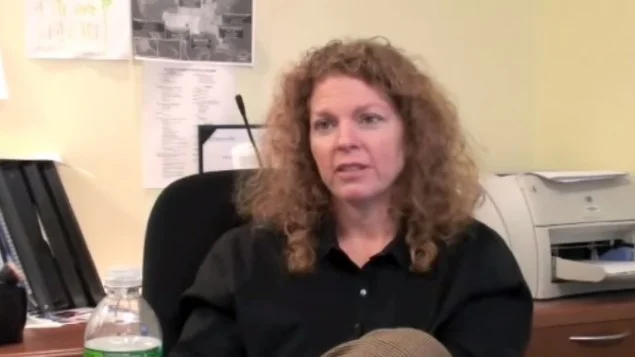
Shannon High-Bassalik, fired in February after working through half of a three-year contract, said the network’s recently ousted chief executive Ehab Al Shihabi left meetings when women were speaking and admitted that he tried to favor an Arab point of view on the air to please AJAM’s Qatar-based ownership.

Al Jazeera America called High-Bassalik’s accusations unfounded and said she made none of them during an investigation of her employment record conducted by an outside law firm.

The troubled news network, an offshoot of the international Al Jazeera network, has reached few viewers in the United States. Through lawsuits and resignations over the past two months, a picture has emerged of a place that has consistently fallen short in its efforts to give Americans a hard news, unbiased alternative to CNN, Fox News Channel and MSNBC.

“As ratings failed to live up to the expectations of management, Al Jazeera openly decided to abandon all pretense of neutrality in favor of putting the Arabic viewpoint front and center, openly demanding that programs be aired that criticized countries such as America, Israel and Egypt,” High-Bassalik’s lawsuit stated. Read More 

Comment

Comment

12 of the coolest new apps from Israel

(Photo: shutterstock.com)

(Photo: shutterstock.com)

By Abigail Klein Leichman - June 11, 2015

Originally appeared here in Israel21c

Take a selfie without hands? Connect with your favorite Chelsea footballers? Cope with an overflowing email inbox? Israeli app makers have you covered.

In honor of Israel Mobile Week – June 8-12, 2015 — ISRAEL21c brings you a dozen more made-in-Israel apps that could make your life healthier, more fun, and more efficient.

1. uHealth - is a focus- and attention-building iOS app from the folks at Umoove. It relies on made-in-Israel eye-tracking technology to guide children or adults through games designed to train them gradually to ignore distractions, focus and be more attentive. Points are earned as concentration improves and you advance to more challenging levels.

2. Safie - allows parents to keep track of, and automatically locate, their children through their phone. The app also notifies parents in case of emergency via a panic button. Each child can be tracked by as many as five adults, and the app can be installed on any smartphone (both parents and children need to install Safie for the app to be operative). Parents can receive updates on the whereabouts of their children every few minutes, every hour or once a day.

3. Fansino - an app to connect fans and performance artists, won App of the Year at the 2015 Mobile World Congress. Fansino enables artists to manage and connect with their fan base from one place, find out who’s listening, track streaming services and online presence, and keep tabs on social-media mentions. It allows fans to gain rank and get rewards, find other fans of the same artists, and follow favorites through one feed. Read More

Comment

Comment

Time to be honest about Israel's capital

(photo: Wikipedia) 

(photo: Wikipedia) 

By Frida Ghitis - June 9, 2015

Originally appeared here on CNN 

Diplomacy sometimes creates moments of delusion, when learned men and women seem to lose touch with reality and speak in confusing sentences. That fact is on clear display when it comes to the issue of Israel's capital.

Let's be clear here: In every reasonable, logical way, the capital of Israel is Jerusalem. That is where the seat of government resides, where the country's parliament stands and legislates and where the President, Prime Minister and Cabinet have their offices and meet. Whatever some governments or politicians might say to the contrary, this fact should be accepted by everyone.

Now, this should not preclude parts of Jerusalem becoming part of another country, say, a future Palestinian state. But when it comes to Jerusalem, as we were reminded Monday by a Supreme Court ruling, nothing is simple.

On Monday, America's top court ruled on the case of 12-year-old Menachem Zivotofsky, who was born in Jerusalem and wanted his passport to state Israel as his country of birth.

Sounds simple, doesn't it?

Sadly, it isn't. In reality, in many situations where the U.S. government talks of Jerusalem, it refuses to say in what country that city is actually located. Indeed, official U.S. policy says the status of Jerusalem is unresolved, subject to the outcome of Israeli-Palestinian negotiations. But while this position is based on the laudable wish to avoid harming the prospects for Israeli-Palestinian peace, there are surely better ways to achieve the same goal without denying reality. Read More 

Comment

Comment

Israel to invest $500 million in Druze, Circassian communities

(photo: Haim Zach/GPO)

(photo: Haim Zach/GPO)

By JTA - June 9, 2015

Originally appeared here in The Times of Israel 

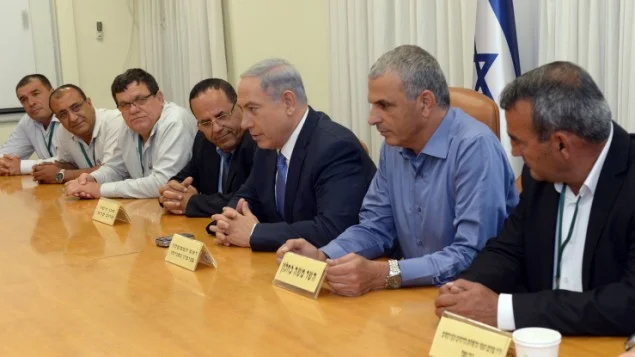
Israel’s Cabinet approved a more than $500 million plan to develop Druze and Circassian communities.

The first half of the new plan was approved in December.

Under the plan, the Israeli government will invest significant resources in the Druze and Circassian communities in education, social welfare, employment, tourism, transportation and planning budgets. Read More

Comment

Comment

The Polyphony Foundation Is Using Classical Music To Bring Jewish And Arab Musicians Together In Israel

By Alexandra Svokos - May 29, 2015

Originally appeared here in The Huffington Post 

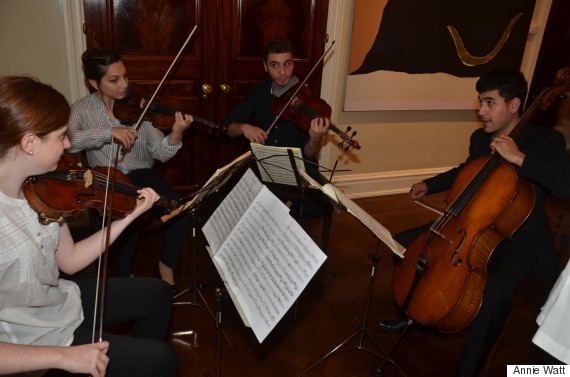
The Polyphony Foundation is spreading classical music across Israel -- and bringing Jewish and Arab people together in the process.

Polyphony began as a small school in 2007 in Nazareth, with the intention of bringing classical music education to the Arab community. After establishing that, co-founder Nabeel Abboud-Ashkar wanted to expand the school's mission. He started the nonprofit Polyphony Foundation in partnership with Deborah and Craig Cogut in 2011 with the goal of creating positive shared experiences between Arab and Jewish communities in Israel.

"Within the challenges that the Israeli society is facing, we thought that classical music can play an important role," Abboud-Ashkar told The Huffington Post.

Polyphony provides basic music education in schools in addition to running conservatories, orchestras and traveling ensembles. It currently serves over 6,000 students in 73 kindergartens and 26 elementary schools across the country. Next year, they expect to nearly double the number of students. Read More

Comment

Comment

Israel's Ethiopian success

By Donny Weber - June 7, 2015 

Originally appeared here in The Jerusalem Post

There is much being written by the national and international media, buoyed by their politics and agenda, and a message being pushed by NGO’s, outside governments, and various agencies, politicians, partisan players, and “those with a principled agenda” as regards the “plight” of the Ethiopian community in Israel: the State is racist. 

Yes. There are major political, social, and especially economic issues and struggles amongst the majority of more than 140,000 Ethiopians in Israel. Issues of race, culture, and disadvantage are also at the forefront of recent demonstrations and clashes with law enforcement. 

But Israel can boast of an Ethiopian success that not even Ethiopia match. Israel can boast of a success with a non-native population far exceeding its native population--within literally months of its founding.

And yet, Israel never had separate drinking fountains, or schools, or train cars, or education systems. Israel has not had a racial or religious based banishment of people from government or public service. Israel does not permit discrimination in employment or hiring practices. Israel did not have slavery and can look at it’s magical history in welcoming--literally-- a “melting pot” of people from every single country in the world.

Yet, sordid characters are claiming apartheid.

And I want to say clearly, concisely, directly: this ain’t your poppa’s South Africa, this ain’t your momma’s Klu Klux Klan American South!! 

If you want to see such turn to ISIS, turn to Islamic ruled or western manipulated nationd in Africa or Asia. Israel is a bastion of freedom, democracy, self determination and goodness. And like every other nation it grapples with it’s flaws and its deficiencies. Read More


Comment

Comment

How Israel became a social gaming hub

(photo: Plarium) 

(photo: Plarium) 

By Deanna Dweck, Plarium - June 5, 2015

Originally appeared here on Venture Beat

At one time, gaming innovators and enthusiasts journeyed to California’s Silicon Valley to devise their technological visions of the future. Now, the tide is shifting to Israel.

Currently, the country of 7.7 million people boasts more than 200 game companies and hundreds of tech companies, according to Invest in Israel. By 2013, 70 percent of the fastest- growing gaming companies on Facebook were in Europe. Half of the top 10 are based in Israel, and according to the Israeli Ministry of Economy, the country’s gaming industry is estimated to be worth up to 2.5 billion shekels ($730 million).

But how did this social gaming powerhouse happen?

Widely recognized as “The Startup Nation,” Israel’s reputation as a tech haven has given credence to its rise in the gaming industry in particular, and the reasons why are easy to fathom. Like the United States in the 19th and early 20th centuries, Israel, in its short history, has been a magnet for immigrants from across the globe.

These newcomers have brought with them not just diverse skills and talents but also a deep understanding of the tastes and interests of the communities from which they come. This understanding has given them a key advantage: Israelis are naturals when it comes to developing products that must jell with a global audience in order to succeed, because they themselves are a microcosm of that audience. Games bring people together, no matter their race, color, or creed. Read More

Comment

Comment

Touma-Sliman becomes first head of a permanent Knesset committee from Arab party

(photo: JOINT ARAB LIST)

(photo: JOINT ARAB LIST)

By Lahav Harkov - June 3, 2015

Originally appeared here in The Jerusalem Post

Israeli Arabs have been Supreme Court justices and government ministers, but on Wednesday they reached a new position in the legislative branch, when MK Aida Touma-Sliman (Joint List) became the first Arab party lawmaker to head a permanent Knesset committee.

Touma-Sliman took the helm of the Knesset Committee for the Advancement of the Status of Women.

The new MK founded the Arab feminist organization Women Against Violence; was one of the founders of the International Women’s Commission for Just Palestinian- Israeli Peace; was the editor- in-chief of Al-Ittihad, the only Arabic-language daily newspaper in Israel; and was the first woman on the High Follow-Up Committee on the Arab Population of Israel.

“I hope to successfully lead processes that will affect all of society, policy and laws,” she said after being elected to the position unanimously, as most committee heads are. Read More

Comment

Comment

Israeli "RayGo" Keeps Your Eyes On The Road, Saves Lives

By Jonathan Neff - June 1, 2015 

Originally appeared here on NoCamels  

We’ve all been guilty of it at some point: Texting while driving, or driving while “intexticated.”

Unfortunately, this type of momentary distraction is the cause of half of all car crashes, according to the AAA Foundation for Traffic Safety. Now, Israeli startup ProjectRay is developing a gadget that will help you avoid texting while driving, potentially saving the lives of thousands of people.

According to the Insurance Institute for Highway Safety, there are close to 33,000 fatal car accidents in the US every year. Since the risk of getting into a car crash is 23 times higher when texting, ProjectRay – which previously focused on communication tools for the blind – has decided to put an end to the problem, by freeing your eyes to focus solely on the road ahead.

Founded in 2011, Project Ray recently completed a successful Indiegogo campaign for a new product called RayGo. It is a simple, five-button Bluetooth device that clips to the steering wheel (or handlebar for cyclists), which allows for voice control of your smartphone. RayGo lets you safely use your favorite apps like Facebook Messenger, Whatsapp, Gmail and Skype while driving or biking. Read More

Comment

Comment

IsraAID sending team to join Texas flood relief effort

(photo: ERIC KAYNE/AFP)

(photo: ERIC KAYNE/AFP)

By Nathan Wise, Reuters - May 30, 2015

Originally appeared here in the Jerusalem Post

The Israeli organization IsraAID will be sending a team to help relief efforts in Texas, where massive flooding has killed at least 21 people and spurred evacuations.

“IsraAID will be mobilizing its relief team from Israel to support the thousands of people impacted by these latest storms,” said Shachar Zahavi, IsraAID’s executive director.

A team of 10 IsraAID volunteers will depart on Sunday for Texas, where they will help with removing debris from damaged houses, Zahavi told The Jerusalem Post.

The organization will be partnering with US disaster relief organization Team Rubicom and will be helping people in the Austin area. The work will assist homeowners to turn to the Federal Emergency Management Agency (FEMA) to receive assistance, Zahavi said. Read More

Comment

Comment

Four Great Food Experiences In Israel

By Jeanne O'Brien Coffey - May 28, 2015

Originally appeared here on Forbes.com 

Food is an exceptional way to connect with a new culture. In Israel, freshly ground spices and nuts perfume the open air markets and form the basis of a cuisine rich with fresh vegetables, locally made cheeses and ancient grains. Here are four worthwhile stops for foodies and anyone who wants to explore Israeli culture through its food.

Chai Goat Farm, Mevo Modi’in
Judy Avraham Chai abandoned life in London and a public relations job to start an organic goat farm with her husband, and is now making cheese so popular she couldn’t age it if she wanted to. A sort of mad scientist of cheese, she makes traditional Middle Eastern cheeses like labneh, a thick savory goat’s milk yogurt, but also makes cheddar, manchego, and Roquefort.

Tours and tastings are by appointment only, and Chai also offers cheese-making classes, and opportunities to milk or herd the goats, who graze in the nearby Ben Shemen Forest.
Tel +0544283646, chaifarm@netvision.net.il

Machane Yehuda Marketplace, Jerusalem
Exotic scents overwhelm at this busy but friendly market. Stands are piled high with green and black olives, spice mixes, teas, baked goods, Israeli olive oil, halvah, and cheese, among countless other goodies. Vendors, many of whom have worked in the stalls for generations, are happy to share tastes and cooking tips. Read More

Comment

Comment

Israel-Texas researchers win top desalination award

(photo: Edi Israel/Flash90)

(photo: Edi Israel/Flash90)

By David Shamah - May 27, 2015

Originally appeared here in the Times of Israel 

Texas is no stranger to droughts, a fact that long ago prompted local leaders to seek technologies that ensure a steady supply of water. With Israel a world leader in water technology, it was only natural that the longhorn state would team up with the Jewish state.

One of the fruits of that collaboration — a joint desalination project involving researchers from the Technion in Haifa and the University of North Texas — has won the $125,000 Desal Prize competition sponsored by the US Agency for International Development (USAID) as part of the Securing Water for Food Grand Challenge, with support from Sida, the Swedish International Development Cooperation Agency, and the Dutch Ministry of Foreign Affairs.

The Israeli and American winners of the award announced that they will use the prize money to help build a water treatment plant in Jordan.

Researchers at the Technion’s Stephen and Nancy Grand Water Research Institute joined the competition at the request of researchers from the electrical engineering department at the University of North Texas. The American researchers, who focused on developing a solution to the alternative energy aspect of the competition, asked Prof. Carlos Dosoretz and Prof. Ori Lahav, researchers from the Technion Faculty of Civil and Environmental Engineering, to design a solution for the desalination component of the project, and to submit a joint proposal. Other researchers from universities in Jordan, Nepal and Brazil worked on other components of the project. Read More

Comment

Comment

Israel's Blatt guides LeBron and Cleveland Cavaliers to NBA Finals

(photo: Reuters)

(photo: Reuters)

By Ynet and Reuters - May 27, 2015

Originally appeared here on Ynetnews.com

Israeli basketball coach David Blatt is taking the Cleveland Cavaliers to the NBA finals, after his team crushed the Atlanta Hawks 118-88 on Tuesday to complete a 4-0 sweep of the Eastern Conference Final.

LeBron James scored a game-high 23 points as the Cavs advanced to the NBA Finals for the first time since 2007, where they will play either the Golden State Warriors or Houston Rockets. The NBA Finals start on June 4.
 
"We've worked our tails off all season to get to the this point, and to be able to represent the Eastern Conference in the NBA finals is the ultimate, especially in this city," James said in a courtside interview. "We'll be ready to go."

The Cavs were bolstered by the return of point guard Kyrie Irving, who had missed the last two games with a knee injury. Irving played 22 minutes and scored 16 points.
 
A jubilant Blatt paid tribute to his team, and reminded fans of the sacrifices he himself has made.
 
"I know it's hard for people to understand because they don't really know well my path and career. But you know this also is a new situation for me and a new place for me," Blatt said. Read More

Comment

Comment

Israel’s first Jordanian PhD wants to bring peace through water

(photo: Renee Ghert-Zand/Times of Israel)

(photo: Renee Ghert-Zand/Times of Israel)

By Renee Ghert-Zand - May 25, 2015

Originally appeared here in the Times of Israel 

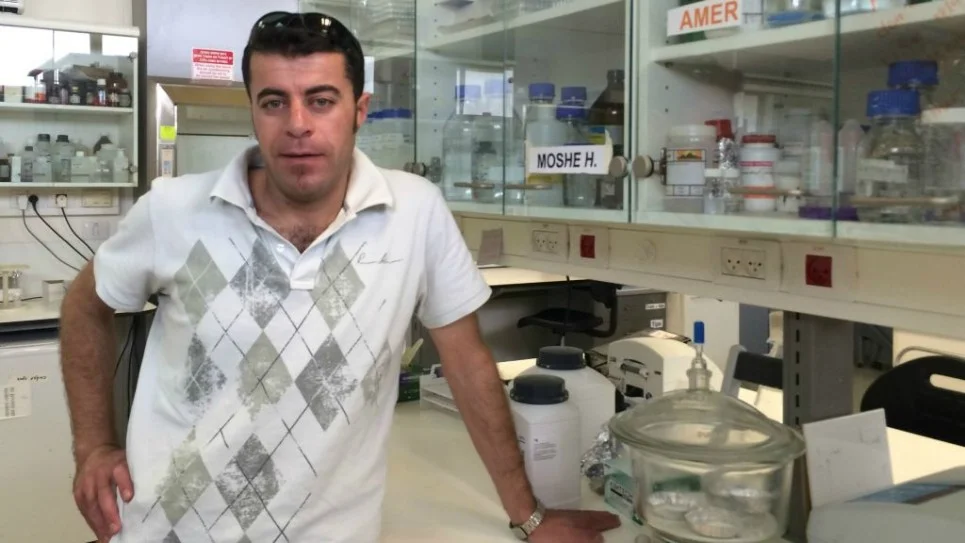
Amer Sweity lives at Midreshet Ben-Gurion in Sde Boker, a tiny community located some 50 kilometers south of Beersheba. He is a Negev desert pioneer, but not in the usual sense. Residing and conducting research at Ben-Gurion University’s Jacob Blaustein Institutes for Desert Research, Sweity recently became the first Jordanian citizen to earn a doctoral degree from an Israeli university.

In fact, based on inquiries The Times of Israel made with several of Israel’s largest universities and the Council of Higher Education in Israel, it appears that Sweity, 34, is the first foreign national from any Arab country to have received a PhD in Israel.

Sweity, who received the BGU Rector’s Award for excellence upon the completion of his degree this past March, is an expert in desalination. His research focuses on the polyamide membranes used in the process of turning seawater into potable water. Specifically, he seeks to optimize the use of various chemicals that are added to the seawater to prevent scaling on the membranes.

“These chemicals can cause side effects. We want to see whether the chemicals decrease the membranes’ efficiency, or whether they create bacterial growth on the membranes,” said Sweity as he showed this reporter around the lab where he did his PhD research funded by Israel’s Water Authority. Read More

Comment

Comment

Israel makes it to Eurovision finals for first time in 5 years

(photo: Screenshot/YouTube)

(photo: Screenshot/YouTube)

By Times of Israel Staff - May 22, 2015

Originally appeared here in The Times of Israel

For the first time in five years, Israel has qualified for the Eurovision finals set to take place in Vienna on Saturday.

Representing Israel this year at the song contest is 16-year-old Nadav Guedj, who performed his pop song “Golden Boy” in front of a rather exuberant audience at the semi-finals on Thursday night. Guedj is the winner of the second season of the Israeli reality TV show “The Next Star.”

The song was released in March and is sung entirely in English.

Israel is among 20 qualifiers for the international contest and will battle countries such as Australia, Azerbaijan, Poland, Latvia and Montenegro for the top spot. Read More

Comment

Comment

The Travelettes Guide to Tel Aviv

(photo: travelettes.net)

(photo: travelettes.net)

By Kathi Kamleitner - May 19, 2015

Originally appeared here on Travelettes.net  

Sand dunes, camels and oriental markets, or glassy high risers, cats and crazy nightlife – what is your idea of Tel Aviv? Mine was probably a little bit of both. Having met Israelis before, I knew Tel Aviv was a city that never sleeps. I knew it was by the seaside and surrounded by desert. I knew it was considerably secular and welcoming. I had heard about the local food and the diverse cultural mix of people. But, oh dear Travelettes – I had no idea what all this would mean thrown together in reality!

Tel Aviv took my heart by storm. A couple of days where enough to lay the foundation for a future life. Or at least a month or two. Any longer and I would roll around, rather than walk… but let’s talk about Israeli food on another occasion. Right now, I want to help you decide to visit Tel Aviv as well, and give you an overview of things to do, places to see and where to spend your shekels. Read on for the Travelettes Guide to Tel Aviv…

Tel Aviv is potentially the smallest metropolis I have ever been to. Only 400,000 people live here, although the Greater Tel Aviv area counts well over 3 million. If you talk to a real central Tel Avivian, don’t even try to define the suburbs as Tel Aviv though – they will tell you, what is and what is not ‘the city’. Back to its surprising size though – despite it’s smallness, it feels so big and diverse, a new neighbourhood behind every corner, vibrating with life, young, beautiful people whereever you look. One could think you’re in Berlin, New York or London.

The city is not only a city that never sleeps, it’s also the start-up capital of the world (closing in on San Francisco & Silicon Valley). Google is here and Amazon, but also new start-ups like Roomer or TravelersBox. The creative energy is always buzzing. Young people from around the world are magnetically drawn here like flies are to light. You’ll find a lot of likeminded souls in a very small space, unfortunately this also means that living here is not on the cheap side… Either way, exploring Tel Aviv is a lot of fun. There are so many sides to it, that you need at least 4-5 days to only meet its most obvious faces. To dig deeper, take some more time, befriend locals and stay for a while. Read More

Comment

Comment

More than 17,000 march in annual "Walk With Israel" in Toronto

(photo: DAVE THOMAS/Toronto Sun)

(photo: DAVE THOMAS/Toronto Sun)

By Terry Davidson - May 18, 2015 

Originally appeared here in the Toronto Sun 

TORONTO - Support, solidarity, and assistance.

 These were the predominant themes during the 48th annual Walk With Israel in Toronto on Monday when more than 17,000 people took up placards and blue-and-white Israeli flags for a march from Coronation Park, through the city’s downtown, and on to Ontario Place.

Steve Shulman of the United Jewish Appeal said the event is designed to “celebrate shared values between Canada and Israel and to raise significant dollars for educational, social, and health care initiatives in Israel.

“I was in Israel last week ... and what you see there is a vibrant democracy ... and that is a clear contrast to the neighbourhood around Israel, which becomes more dangerous by the day,” he added. “So, in many ways, despite all of these challenges Israel has, (it) is very much a light in terms of what can be in the Middle East.” Read More

Comment

Comment

Israel’s Efforts to Help Nepal, Mideast Christians, Show True Spirit of Zionism

(Photo: IDF Spokesperson via Twitter)

(Photo: IDF Spokesperson via Twitter)

By Gabriel Nadaf - May 17, 2015

Originally appeared here in The Algemeiner 

Significant public discussion began recently regarding Israel’s and the Israel Defense Forces’ (IDF) mobilization to assist the wounded and missing from the earthquake in Nepal.

A large IDF delegation left for the disaster area in Kathmandu, and within a few days established a field hospital as well as a system for locating missing Israelis in cooperation with the Israeli Ministry of Foreign Affairs. Of course, the results were not long in coming. Nearly all the Israelis were located, many of them were evacuated to Israel, and the IDF’s Medical Corps field hospitals have provided medical services to thousands of Nepalese victims who were wounded during the initial earthquake and its aftershocks.

The State of Israel has shown its solidarity with the world community – sending more equipment and manpower than almost any other country in the world – and its efforts have been favorably received and supported. Israel’s action is based on the classic idea of mutual responsibility among the Jewish people – and any people who are in distress, be they Jewish or not. This help and assistance is almost unquestioningly given and received, even here in Israel – a country where normal discourse consists of constant argument between various opinions (like the famous saying goes: ask two Israelis and get three opinions).

This clearly Zionist value is expressed today in Nepal, but not only there. For example, the non-governmental organization Rescuers Without Borders, headed by Rabbi Aryeh Levi from Beitar Illit (an ultra-Orthodox rabbi living in a settlement), is operating in Kathmandu right now. At the same time, he is working with me (an Aramaic Greek-Orthodox priest and the head of the Christian Empowerment Council) to collect basic supplies for Christian refugees who escaped the clutches of the murderous terrorist organization ISIS. Surprisingly (or not), the main source of our manpower for this blessed activity is volunteers from the Zionist non-governmental organization Im Tirtzu, whose main volunteers are Israeli students. Read More

Comment

Comment

'We love you, IDF,' say Arabs from across the Middle East

By Jpost.com Staff - May 14, 2015  

Originally appeared here in The Jerusalem Post

An Arab-language Facebook page posted by an Israeli Arab citizen seeking to paint the IDF in a positive light has surprisingly attracted adoring feedback from youths across the Middle East who have responded with expressions of love and peace.

The page, which was given the title Tzahal bistahal (“the IDF is worth it”), features pro-Israel messages about the country and the army as well as anti-Hamas images. 

Yet what is most noteworthy were the numerous photographs sent by young Arabs from Egypt, Syria, Iraq, Yemen, Saudi Arabia, Jordan, and Morocco wishing to express solidarity and admiration for the Israeli military despite its image as an occupying power. Read More


Comment