Comment

Jordanian Man Swims to Israel for a Better Future

(Photo By: Israel Police)

(Photo By: Israel Police)

By: Israel Today Staff - September 2, 2020

Israel’s southern resort city of Eilat got a surprise visitor on Wednesday that sparked a brief, but intense security situation.

Vacationers reported the police and military suddenly swarmed an Eilat beach after a Jordanian man suddenly emerged from the water.

Read More: Israel Today

Comment

Comment

Israel, UAE Will Cooperate on Financial Services, Investment

(Photo By: Ministry of Presidential Affairs/WAM/Handout via Reuters)

(Photo By: Ministry of Presidential Affairs/WAM/Handout via Reuters)

By: Reuters and Algemeiner Staff - September 1, 2020

Israel and the United Arab Emirates agreed on Tuesday to set up a joint committee to cooperate on financial services, aiming to promote investment between the two countries, an Israeli statement said.

An Israeli delegation is in Abu Dhabi on a historic trip to finalize a pact marking open relations between Israel and the Gulf state.

Read More: Algemeiner

Comment

Comment

Israel to send firefighters to help battle California blazes

(Photo By: AP Photo/Noah Berger)

(Photo By: AP Photo/Noah Berger)

By TOI Staff and AP - August 28, 2020

Israel will dispatch a team of firefighters to California to help the US state battle the largest fires in its recent history, the Foreign Ministry announced Friday.

The Israeli delegation, organized together with the Public Security Ministry, is set to depart Sunday and will be in California for two weeks.

Alongside the firefighters, experts on rescue and forest fires, as well as a Foreign Ministry representative, will make the trip, according to a ministry statement.

Read More: Times of Israel

Comment

Comment

Israeli Photographer Wins 2020 iPhone Photo Award for Stunning New Zealand Shot

(Photo By: Avishai Futerman)

(Photo By: Avishai Futerman)

By: Simona Shemer - July 22, 2020

A photo of a kea, the world’s only species of alpine parrot taken by Israeli photographer Avishai Futerman with an iPhone XR as the bird swoops down over the summit of Mt. Luxmore in the South Island of New Zealand, has won second place in the Nature category of the 2020 iPhone Photography Awards (IPPAWARDS).

The winners were announced on Wednesday. The Grand Prize Winner and Photographer of the Year Award went to British street photographer Dimpy Bhalotia for her image “Flying Boys.” First, Second and Third Place Photographer of the Year Awards went to Artyom Baryshau of Russia with “No Walls,” where blue stripes fade into an even bluer sky; Geli Zhao of China for an untitled image of sheets catching wind on a cloudy day; and Saif Hussain of Iraq with “Sheikh Of Youth,” a portrait of an elderly man caught between aspects of himself.

Read More: NoCamels

Comment

Comment

Pure gold: Teens find 425 Islamic coins from 1,100 years ago at Israel dig

(Photo by: Yoli Schwartz/Israel Antiquities Authority)

(Photo by: Yoli Schwartz/Israel Antiquities Authority)

By TOI Staff - August 24, 2020

A rare hoard of 425 gold coins from the Abbasid Caliphate, dating around 1,100 years ago, was uncovered by teenage volunteers at an archaeological excavation in the center of the country, the Israel Antiquities Authority (IAA) announced on Monday.

Perhaps for obvious reasons, the IAA did not specify the exact location of the site where the gold was discovered. The trove was discovered by a group of young people carrying out volunteer work ahead of their mandatory army service.

Read More: Times of Israel

Comment

Comment

Israeli ed-tech solutions help launch a very unusual school year

(Photo: Olivier Fitoussi/FLASH90)

(Photo: Olivier Fitoussi/FLASH90)

By Abigail Klein Leichman  - August 24, 2020

This is a back-to-school season like no other. With the world still in the grips of the coronavirus pandemic, millions of students will attend class online for at least part of every week.

The challenges are great, from connectivity issues to not enough devices for each child, to a lack of social contact. Still, remote classes will be part of the education landscape for a long time if not forever.

Read More: Israel21c

Comment

1 Comment

Canaanite Fort From Judges Epoch Found in Southern Israel

(Photo: Emil Aladjem, Israel Antiquities Authority)

(Photo: Emil Aladjem, Israel Antiquities Authority)

By Ruth Schuster - August 23, 2020

A Canaanite fort from the blood-soaked biblical epoch of the Judges has been found near Kibbutz Gal-On in southern Israel, the Israel Antiquities Authority announced on Sunday.

The IAA archaeologists leading the dig, Sa'ar Ganor and Itamar Weissbein, date the stronghold to about 3,150 years ago. They think it was built by the Canaanites, based on its manner of construction and hundreds of pottery pieces found at the site, and partly on biblical lore about that era – the time of the Judges.

Given certain Egyptian characteristics of the construction and artifacts, it seems the ancient Egyptian overlords who controlled Canaan at the time were instrumental in building the Gal-On fort. Why? To fight the Philistines, who were waxing powerful and frightening on the Canaanite coast, Ganor postulates.

Read More: Haaretz

1 Comment

2 Comments

In historic declaration, Israel and United Arab Emirates agree to normalize ties

(Photo: Kobi Gideon/PMO)

(Photo: Kobi Gideon/PMO)

By Raoul Wootliff - August 13, 2020

Israel and the United Arab Emirates reached an historic agreement on Thursday to set up full diplomatic relations between the two countries, the third such deal the Jewish state has struck with an Arab country after Egypt and Jordan.

A White House announcement said the leaders of the US, Israel and the UAE “spoke today and agreed to the full normalization of relations between Israel and the United Arab Emirates.”

Israeli and UAE delegations will meet in the coming weeks to sign bilateral agreements regarding investment, tourism, direct flights, security and the establishment of reciprocal embassies, it said.

Read More: Times of Israel

2 Comments

Comment

Checking in on COVID-19 and Jewish Seniors

Leket.jpg

As America’s battle with the novel coronavirus has raged on, America’s Jewish community has suffered its share of losses, particularly early on when COVID-19 swept through the boroughs of New York City and upstate New York. No age group has been as widely affected as the elderly, making nursing homes, assisted-living facilities, and senior residences ground zero in the battle against the virus, at least at first.

While other states in the Northeast — Massachusetts, Connecticut, New Jersey, and Pennsylvania — were also hit hard at the beginning of the pandemic in March and April, cases of infection lessened significantly after months of social distancing and lockdowns. 

Florida, Texas, Arizona, Louisiana, and Georgia are now facing a massive surge in new infections, hospitalizations, and deaths. Given these ongoing statistics, what can be learned from early hot spots to help states now facing a similar crisis?

I spoke with Jewish nursing-home administrators in Miami, Pittsburgh, and New York to hear from those on the front lines about how they have coped and are still coping, in addition to the lessons learned and efforts to protect the elderly going forward.

One decision they noted was a March 25 mandate by the New York State Department of Health requiring nursing homes to accept coronavirus patients considered to be “medically stable” after being discharged from a hospital, unless facilities could demonstrate that they were unprepared to do so. The order did not require these patients tested to be tested for COVID-19; in fact, it explicitly said not to.

Read More: Algemeiner

Comment

Comment

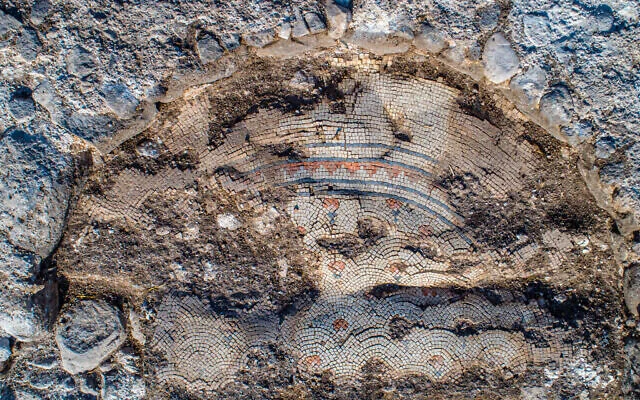
1,300-year-old church with colorful mosaics discovered in the Galilee

The remains of a 1,300-year-old church featuring fine mosaic floors were uncovered in the village of Kfar Kama in the Lower Galilee, the Israel Antiquities Authority announced on Tuesday.“The church, measuring 12 × 36 m., includes a large courtyard,…

The remains of a 1,300-year-old church featuring fine mosaic floors were uncovered in the village of Kfar Kama in the Lower Galilee, the Israel Antiquities Authority announced on Tuesday.

“The church, measuring 12 × 36 m., includes a large courtyard, a narthex foyer and a central hall,” IAA archaeologist Nurit Feig said in a press release. “This church presented three apses [prayer niches], The nave and the aisles were paved with mosaics which partially survived. Their colorful decoration stands out, incorporating geometric patterns, and blue, black, and red floral patterns. A special discovery was the small reliquary, a stone box used to preserve sacred relics.”

The church was first found during the excavation ahead of the construction of a playground in the village at the initiative of the Kfar Kama Local Council and the Jewish National Fund.

Another church, dating back to the 6th century, was discovered in the town, a Circassian center, in the 1960s.

“This was probably the village church, whilst the church now discovered was probably part of a contemporary monastery on the outskirts of the village,” said Prof. Moti Aviam of the Kinneret Academic College, who collaborated in the excavation.

The researchers also uncovered several rooms adjacent to the church and additional chambers yet to be excavated were revealed by a ground-penetrating radar inspection operated by Dr. Shani Libbi.

Read More: Jerusalem Post

Comment

Comment

Meet the Israelis building new businesses during a pandemic

New.jpg

The crushing effect of the coronavirus pandemic on employment, tourism and retail has triggered a wave of new home businesses – everything from facemask sewing to personal catering.

The crisis has others adapting their existing businesses or finding new ways to generate income that don’t require customers to venture out of the house.

There are even entrepreneurs testing traditional retail options as customers slowly return to public spaces.

Let’s take a look creative new enterprises brightening the scene in Israel during these difficult days.

DELICIOUS EXPERIENCES

Business was booming for Inbal Baum, head of Delicious Israel culinary tours. “I didn’t have a care in the world until March 7 hit,” she tells ISRAEL21c.

To make matters worse, her husband’s high-tech startup had folded in February.

Baum and her spouse, Tal Ater, didn’t have time to sit around being depressed. They started two new offshoots of Delicious Israel.

First, they began offering virtual food tours and cooking classes. “It’s going really well,” Baum says. “We wouldn’t have done this otherwise and it has turned into a great opportunity to connect Israel in a non-political way with Jewish groups, federations and summer camps overseas.”

Read More: Israel 21c

Comment

Comment

Huge Kingdom of Judah government complex found near US Embassy in Jerusalem

Huge Kingdom.jpg

One of the largest collections of royal Kingdom of Judah seal impressions has been uncovered at a massive First Temple-period public tax collection and storage complex being excavated near the new United States Embassy in Jerusalem. The main Iron Age structure is exceptional in terms of both its size and architectural style, said Israel Antiquities Authority archaeologist Neri Sapir, who co-directed the excavation.

Uncovered only three kilometers (1.8 mile) outside the Old City, the compound is believed by Israel Antiquities Authority archaeologists to have served as an administrative center during the reigns of Judean kings Hezekiah and Menashe (8th century to the middle of the 7th century BCE).

Over 120 jar handles stamped 2,700 years ago with ancient Hebrew script seal impressions were discovered at the site, clearly indicating the location’s use as a storage and tax center, according to an IAA press release Wednesday. Prevalent among the stamped inscriptions is “LMLK,” “LamMeLeKh,” or “Belonging to the King,” a way of marking that the foodstuffs stored in the jars had been tithed to the Judean ruler.

This trove of LMLK seal impressions adds to the over 2,000 similar seals previously discovered at excavations and allows archaeologists to rethink the administrative and tax collection systems of the Kingdom of Judah.

“This is one of the most significant discoveries from the period of the Kings in Jerusalem made in recent years. At the site we excavated, there are signs that governmental activity managed and distributed food supplies not only for shortage but administered agricultural surplus amassing commodities and wealth,” said IAA excavation co-directors Sapir and Nathan Ben-Ari in a press release Wednesday.

Read More: Times of Israel

Comment

Comment

Greek Woman Reunited With Siblings She Saved During Holocaust and Their 40 Descendants

Hall of Names.jpg

“There is no way to describe the acts of heroism and the danger they took upon themselves and all those around them to shelter an entire family,” said Sarah Yanai upon reuniting with the Greek woman who, along with her two sisters, hid her and five other members of her family during the Holocaust.

“The feeling is very emotional and very exciting. I cannot describe it,” said the 86-year-old. “What can I say? They saved our lives.”

At the Hall of Names at Jerusalem’s Yad Vashem, Greek rescuer Melpomeni Dina, 92, now living in Thessaloniki, Greece, was reunited with two survivors she saved during the Holocaust: Yanai, who now lives in Ramat Hasharon, and her brother Yossi Mor, 77, now living in Beersheva.

Melpomeni Dina (then Gianopoulou) was just 14 when she and her two orphaned sisters, Efthimia and Bithleem, decided to hide the Jewish family in their home.

For more than two years, they hid and provided for the Mordechai family, including Sarah and Yossi; their parents (Mentes and Mari); and siblings Asher, Shmuel, and Rachel. Due to the heroism and sacrifice of the Gianopoulou sisters, most of the family survived the war.

According to Yad Vashem, Gianopoulou’s connection to the Mordechai family was through Melpomeni’s sister, Efthimia (married name Xanthopoulou), who before the invasion of Greece had studied to become a seamstress at Mari Mordechai’s studio in Veria. Since Efthimia was an orphan and very poor, Mari did not charge her for the lessons.

Read More: Algemeiner

Comment

1 Comment

Biblical site of Ziklag finally identified

Toa.jpg

The location of Ziklag, a settlement mentioned several times in Jewish scriptures, has long been debated. To date, up to 15 sites have been suggested by archaeologists attempting to find the biblical town, such as Tel Halif near Kibbutz Lahav, Tel Shera in the western Negev, and Tel Sheva.

Ziklag is mentioned several times in the Bible, most famously in the Book of Samuel, when a young David was granted refuge from King Saul by the Philistine King Achish of Gat. David was awarded Ziklag as a vassal state, under the protection of Achish, and he used it as a base for raids against the Geshurites, the Girzites and the Amalekites.

According to the Book of Samuel, the city was destroyed by the Amalekites and the population was enslaved. After Saul was killed in battle with the Philistines, David left Ziklag and traveled to Hebron to be anointed king of Israel.

Tel a-Sharia in the Negev has long been identified as one of the possible locations of Ziklag, and has one of the strongest claims to being the ancient settlement. Now, another theory has been put forward that supports Tel a-Sharia’s claims.

Read More: Jerusalem Post

1 Comment

Comment

Banknote helps Holocaust survivor reunite with soldier who liberated her

BankNote.jpg

The great-grandson of Auschwitz survivor Lily Ebert, Dov Forman, 16, shared an interesting story about how the family's matriarch reunited with the soldier who liberated her.

Forman said that his great-grandmother showed him an Allied military authorities' (Alliierte Militärbehörde) banknote inscribed with a hopeful message. A message that also helped her find the kind individual who gifted her the note and freed her from the Nazi death camp near the end of the Holocaust.

“A start to a new life. Good luck and happiness,” the note read in English. "Assistant to Chaplain Schacter."

To whom the note is referring to is an assistant to Chaplain Herschel Schacter.

Schacter was an American Orthodox rabbi who seved as a chaplain in the Third Army's VIII Corps. Schacter also participated in the liberation of the Buchenwald concentration camp on April 11, 1945, where he aided survivors afterwards and led religious services. He is also credited for assisting in the relocation of survivors, one such survivor in particular being orphaned writer and Nobel laureate Elie Wiesel.

After the post became widespread, earning over 15,000 likes and 2,000 retweets, Forman received responses from around the world and found the unnamed soldier to be Private Hayman Shulman from New Jersey. Shulman passed away seven years ago. And further due to the success of the post, Lily and Dov had the opportunity to speak with the family of the deceased soldier to thank them for his kindness posthumously.

Read More: Jerusalem Post

Comment

1 Comment

DeSean Jackson Accepts Fellow NFL Wide Receiver Julian Edelman’s Invite to Learn More About Holocaust

footbal.jpg

New England Patriots wide receiver Julian Edelman got a positive response from fellow NFL player DeSean Jackson after the Jewish athlete offered to educate the latter about the Holocaust.

On Thursday, Edelman, whose father is Jewish, invited the Philadelphia Eagles wide receiver to go with him to the United States Holocaust Memorial Museum in Washington DC and the nearby National Museum of African American History and Culture. Afterward, they could have “those uncomfortable conversations” that were needed “if we’re gonna have real change,” Edelman said in the Instagram video.

“I have seen DeSean play in his career, make outstanding football plays, we communicated over social media,” Edelman added. “I have nothing but respect for his game. I know he said some ugly things, but I do see an opportunity to have a conversation.”

Edelman’s invitation was in response to antisemitic Instagram posts involving Nazi leader Adolf Hitler that Jackson uploaded earlier in the week, which he has since deleted and apologized for.

On Friday morning, Edelman shared on Twitter that he spoke with Jackson the previous night and they were “making plans to use our experiences to educate one another and grow together.”

Read More: Algemeiner
1 Comment

Comment

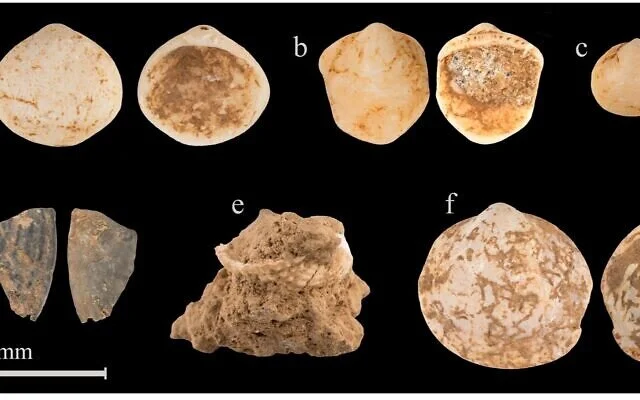
World’s 1st Necklace? Prehistoric Painted Shells, Once on Twine, Found in Israel

fossils.jpg

Sometime around 160,000 to 120,000 years ago, early man began to string together painted shells and display them, according to a new international, interdisciplinary study published in the open-sourced PLOS One journal this week.

The authors, a team of scientists led by Tel Aviv University’s Daniella E. Bar-Yosef Mayer and University of Haifa’s Iris Groman-Yaroslavski, performed “use-wear” experiments on bittersweet clam (Glycymeris) shell collections excavated in two northern Israel caves. They discovered that the naturally occurring holes in the bi-valve shells showed proof of having been strung on flax twine, apparently to form early humans’ first necklaces.

Until now, the earliest potential example of string use was in the form of fibers found on an eagle talon recently found in Krapina, Croatia, dating to 130,000 years ago.

Early humans migrated out of Africa — potentially during a Levantine Ice Age — circa 200,000 years ago. With their arrival to the Israeli caves, also came their shell collections. In the new study, the authors suggest that the clam shells — which were abundantly found on the beaches not far from the Carmel Mountain caves — were chosen precisely because of their easily strung holes.

“Our data suggest that sometime within the time range of 160 and 120 ka BP the technology for making strings emerged, and that this technology boosted the collection of naturally perforated shells for display, a practice common to this day,” write the authors in the article, “On holes and strings: Earliest displays of human adornment in the Middle Palaeolithic.”

Read More: Times of Israel

Comment

Comment

Memorial Dedicated to Albanians Who Rescued Jews During the Holocaust

A memorial to Albanians who rescued Jews during the Holocaust, established jointly by the US and Albania, was dedicated on Thursday, with the US ambassador to Albania calling the country’s legacy of rescuing Jews “an inspiring story of humanity, cou…

A memorial to Albanians who rescued Jews during the Holocaust, established jointly by the US and Albania, was dedicated on Thursday, with the US ambassador to Albania calling the country’s legacy of rescuing Jews “an inspiring story of humanity, courage, and honor.”

The memorial in the Grand Park of Tirana was established by the US Commission for the Preservation of America’s Heritage Abroad and the Municipality of Tirana, and marks Albania’s almost unique place in the history of the Holocaust.

According to Israel’s Holocaust memorial and museum Yad Vashem, some 600-1,800 Jews fled to Albania during the Holocaust. After the Germans conquered the country in 1943, Albanians refused to hand over lists of Jews, provided Jews with documents allowing them to hide within the general population and took other measures that led to the survival of almost the entire Jewish community, with more Jews remaining in Albania after the war than before.

Many attribute this accomplishment to the concept of besa, a code of honor in Albanian society that demands ethical action and respect for life, especially on behalf of guests and those in need.

US Ambassador Yuri Kim said at the dedication of the memorial, “After Hitler’s rise to power, Albanian families sheltered hundreds of Jewish people from around Europe, saving them from Nazi forces. People from all walks of life, Muslims, Christians, elites, peasants, teachers, government officials, and clergy — an entire nation — worked to rescue Jews. It is an inspiring story of humanity, courage, and honor.”

Read More: Algemeiner

Comment

Comment

Israeli hero drowns while saving Bedouin family

ben-zikri2_1.jpg

It was a rare and touching moment stemming from a tragedy: Jewish and Bedouin mourners joining to pay their final respects to 45-year-old Michael Ben Zikri.

On July 3, the newlywed and father of three from Ashdod drowned after rescuing a Bedouin Arab family from a sinkhole in Nahal Shikma, a manmade lake south of Ashkelon.

Ben Zikri’s widow, Cheli, reported that the water was no deeper than a wading pool and so she was puzzled when someone appeared to be in distress. Her husband handed her his sunglasses and said, “Go to the beach, I’m going to save them.”

On her way back to shore, she herself got stuck in a sinkhole and had to be helped out. Later, she directed rescue services to where she’d last seen her husband and they recovered his body. Apparently, the effort of saving four members of the al-Karem family had left him with no strength to save himself.

The rescued woman and the children, aged 14, 10 and 7, were released from the hospital on July 5. On that same day, their extended al-Karem family from the Bedouin village of Hura came to Ben Zikri’s funeral in Ashkelon.

A group of boys from the village came with a hand-lettered Hebrew sign saying: “Thanks and appreciation for your bravery. Condolences to the family. The youth of Hura.”

Read More: Israel 21c

Comment

Comment

Meet the woman breaking down barriers in Israel

Araro.jpg

Some people protest by going out onto the street. Others protest by achieving greatness in their professional sphere, but some – like Ashagar Araro – protest through education.

Twenty-nine-year-old Araro is the Ethiopian-Israeli founder of Battae, an Ethiopian Heritage center in the heart of Tel Aviv.

At the center, which she runs with her aunt, Fanta Prada – a former model and the owner of Ethiopian restaurant Balinjero – they introduce visitors from Israel and all over the world to the joy of Ethiopian culture through food, dance and art.

“Once people understand our background and culture, and where we are coming from, they understand who we are, and it’s easier to break down barriers and stereotypes,” says Araro.

Araro was born in Ethiopia in 1991 as her family walked from their village to the capital Addis Ababa where they were picked up by the Israeli military as part of Operation Solomon, and airlifted to Israel.

It was a daring 36-hour operation. Thirty-five Israeli aircraft transported 14,325 Ethiopian Jews to the country. Most arrived in the country with very few possessions.

Read More: Israel 21c

Comment