Comment

Israel's innovation level twice that of other nations

Israel is a world leader in digitization, cyber, and medical technology, Organization for Economic Cooperation and Development Deputy Secretary General Ulrik Vestergaard Knudsen said on Sunday.Speaking at an online conference hosted by The Jerusalem…

Israel is a world leader in digitization, cyber, and medical technology, Organization for Economic Cooperation and Development Deputy Secretary General Ulrik Vestergaard Knudsen said on Sunday.

Speaking at an online conference hosted by The Jerusalem Postmarking 10 years since Israel joined the OECD, Knudsen said, "The Israeli level of development and digitization is twice that of other OECD countries."

The Jewish state contributes a great deal to the world's knowledge and has a "very strong foundation" for future growth, said Knudsen.

"Israel has one of the highest levels in internet accessibility for children up to age six. Israel has a lot of information in the field of network security, and it contributes a lot to our knowledge and experience. This has given you a very strong foundation and an opportunity for rapid development in the future," he said.

Israeli President Reuven Rivlin also spoke at the virtual conference, praising the strength of the Israeli economy over the past decade and noting that when Israel joined the OECD, structural changes to the country had been required, as well as the meeting of targets that he said had brought improvements in a range of fields.

However, Rivlin said that while much has been accomplished, much remains still to be done.

Read More: Israel Hayom

Comment

Comment

Israeli-made flying cars may be floating into our future

Flying Car.jpg

For nearly 60 years, the dream of flying cars that many Baby Boomers grew up on while watching TV’s George Jetson jet around the skyways has remained unfulfilled.

But the dream is still alive. A dozen startups around the world are developing VTOLs (“vertical takeoff and landing”) – the technical term for flying cars.

One of the most intriguing of those companies is right here in Israel. Yavneh-based Urban Aeronautics is developing CityHawk to be an eventual “Uber of the air.”

Urban Aeronautics’ CityHawk will have two features that make it stand out from the flying crowd.

First, the CityHawk won’t have wings or external rotors. Urban Aeronautics has spent the last decade and a half perfecting an internal propeller system called Fancraft (named after the large fans at the front and rear of the aircraft) that is safer for passersby and takes up much less space.

Second, the CityHawk will be about the size of a large SUV so that it can land on a sidewalk near your home or office. Alternatively, up to four CityHawks could land on the roof of an office building compared with just a single traditionally sized helicopter.

Read More: Israel 21c

Comment

Comment

Israel becomes first country to incorporate breakthrough leukemia therapy

Docs.jpg

Israel is the first country to incorporate a breakthrough therapy developed for cancer patients suffering from an aggressive type of leukemia which, although extremely common, often leaves them with no other treatment options.

The new therapy, the first of its kind to be developed in twenty years, is by AbbVie, a research-based global biopharmaceutical company. Already after the early stages of the trial, Israel had included the therapy into the state-subsidized health care basket.  Results from phase 3 of the therapy study were only presented earlier this month to the virtual 25th European Hematology Association (EHA) Annual Congress that took place on June 11-21.

The results from the study constitute a historic breakthrough for patients suffering from acute myeloid leukemia (AML), a relatively common type of leukemia, with 160,000 patients across the globe who live with the disease. The treatment, a combo-therapy of venetoclax and azacitidine, was developed for AML patients who have very little other treatment options since they are often ineligible for bone marrow transplant or intensive chemotherapy.

Read More: Jerusalem Post

Comment

Comment

Tel Aviv-Jerusalem ranked world's 6th strongest start-up ecosystem

Tel Aviv.jpeg

The start-up ecosystem in Tel Aviv-Jerusalem was ranked sixth worldwide in the Global Startup Ecosystem Report for 2020 (GSER 2020), tying with Los Angeles.

The report was conducted by Startup Genome, and is among the world's most comprehensive and practical research reports on the success and performance of start-up ecosystems.

In their deep dive on the ranking of the Tel Aviv-Jerusalem ecosystem, the report discussed the particular strengths of the sub-sector, such as cybersecurity and research in artificial intelligence (AI), big data and analytics.

Regarding cybersecurity, the report noted an annual export of cybersecurity products totaling $6.5 billions, and that it was the first country to offer a PhD in cybersecurity, as well as being home to six different cybersecurity university research centers.

In addition, the report noted that Israel ranks third worldwide in the total number of AI start-ups, many of which are the among the field's leading firms.

The Israeli ecosystem is valued at $47 billion with early stage funding totaling at $3 billion. For comparison, the global average for these values are $10.5 billion and $431 million, respectively.

Read More: Jerusalem Post

Comment

Comment

Coca-Cola launches new mango-flavored zero-calorie version in Israel

COLA.jpg

Coca-Cola Israel launched a new flavor of its zero-calorie version for the Israeli market, Coca-Cola Zero Mango, Israel Hayom reported.

The decision to launch a mango-flavored version was motivated by local market research.

According to Israel Hayom, this research showed that mango was a preferred choice for Israelis.

However, many of the Israelis involved in the taste test seemed confused, wondering why drink mango-flavored Coca-Cola rather than buy mango juice or a similar alternative.

Others did not have an immediately positive view of the product, stating that it took time to get used to the new taste. They noted, however, that it tasted better after being chilled in the freezer for an hour, Israel Hayom reported.

Read More: Jerusalem Post

Comment

Comment

Austria breaks ground on Holocaust memorial in Vienna

Holocaust Memorial.jpg

 Austria broke ground Monday on a new memorial to the country’s 65,000 Jews killed during the Nazi era.

“The Memorial to the Jewish Children, Women and Men of Austria who were Murdered in the Shoah” being erected in Vienna’s central Ostarrichi Park will consist of large slabs set in the ground in a circle, engraved with the names of the 64,000 victims who have been identified. Another 1,000 are known to have been killed by the Nazis, but their names have been lost.

Nazi dictator Adolf Hitler was born in Austria, and many in the country enthusiastically welcomed Germany’s annexation of it in 1938, the year before World War II.

At that time, around 210,000 Jews lived in the country. Many fled, but later found themselves in Nazi hands again as the German armies swept westward to the English Channel and deep into the Soviet Union in the east.

The memorial, to be completed by next spring, is envisioned as a place of reflection, and both a tribute to those who lost their lives and a reminder of the perils of anti-Semitism.

There is only one entrance into the center of the circle formed by the slabs, which will create a “place of reverence” for visitors, according to the plans.

Read More: Times of Israel

Comment

Comment

Portuguese diplomat who rescued 10,000 Jews to be honored with Lisbon monument

CHAAN.jpg

JTA — Aristides de Sousa Mendes, a Portuguese diplomat who saved thousands of Jews during the Holocaust, will be recognized with a monument at a site in Lisbon that recognizes the country’s greatest figures.

The parliament decreed the honor unanimously earlier this month at the National Assembly in Portugal’s capital. The monument will go in the National Pantheon, a former church.

“Aristides Sousa Mendes, as a heroic historical figure, is part of Portugal’s national patrimony,” the resolution reads. “A moral legacy for all, his heritage is for the whole of civil society and above all a virtuous example for future generations.”

In 1940, Mendes served as consul in Bordeaux, France, where he gave visas to refugees fleeing the Nazi advance. He is estimated to have saved 30,000 people, including 10,000 Jews.

After his actions in Bordeaux, a city located just 120 miles north of France’s border with Spain and the Iberian Peninsula, Mendes was suspended and fired from the diplomatic service of Portugal, then a dictatorship under Antonio de Oliveira Salazar.

However, Mendes was posthumously vindicated and recognized as a Righteous Among the Nations — a title conferred on behalf of the State of Israel by the Yad Vashem Holocaust museum in Jerusalem to non-Jews who risked their lives to save Jews during the Holocaust.

Read More: Times of Israel

Comment

Comment

Special vessels show Jewish continuity in Israel after Roman destruction

archeol.jpg

New research offers insights on how Jewish life continued in the Land of Israel after the destruction of the Temple and of Jerusalem at the hands of the Romans.

The use of chalkstones vessels, very common among the Jewish population during the Second Temple Period, did not stop with the destruction of city in the second century CE as previously thought, but continued in the Galilee, the new center of Jewish life, for at least another two centuries, a paper published in the May issue of the Bulletin of the American Schools of Oriental Research (ASOR) documented.

Several types and examples of such vessels have been unearthed in Tzipori (Sepphoris), Zeev Weiss, a professor at the Institute of Archaeology of the Hebrew University of Jerusalem, who co-authored the paper together with Maya Sherman, Tami Zilberman and Gal Yasur, explained to The Jerusalem Post.

“As an archaeologist studying the material culture of the Jewish society in the days following the destruction of the Second Temple, I was struck by the fact that these vessels could be found in several areas throughout the site,” he said. “We uncovered more and more evidence, including in the last season of excavations two years ago, and we were able to prove that they were in used in that period.”

Read More: Jerusalem Post

Comment

Comment

Archaeologists unearth Galilee Christian town sacked by Persians in 7th century

beeds.jpg

Israeli archaeologists have published a 360-degree analysis of a rural, affluent Christian town in the Galilee that was most likely destroyed by Persian invaders in 613 CE.

Unearthed in 2007 in a salvage excavation before roadworks near Shlomi and Kibbutz Hanita, the remains of the Byzantine settlement at Pi Mazuva are located in modern Israel’s northwest corner on the border with Lebanon. The finds include Christian iconography, a large house and a colorful, high-quality, partially preserved mosaic floor.

The findings were published in June’s edition of Atiqot, a research journal produced by the Israel Antiquities Authority, and initially reported on in Haaretz. The lead researchers were Gilad Cinamon, Yoav Lerer, Gabriela Bijovsky and Rina Talgam.

According to the open-source Hebrew-language publication, the settlement was mentioned in the 4th-5th century Jerusalem Talmud as being part of “forbidden territories,” and according to Jewish law (halacha), were not considered part of Jewish territory. At the same time, certain commandments for Jews located in the Land of Israel were still enforced.

“While for now we have no documents from Christian sources about this settlement, all the evidence points to an almost entirely Christian population,” Cinamon told Haaretz.

Read More: Times of Israel

Comment

Comment

Israeli company helps US National Institutes of Health fight coronavirus

helpus.png

Israeli data company MDClone is supporting the US National Institutes of Health in the fight against the coronavirus crisis.

The Beersheba-based company, established four years ago, provides big-data solutions for healthcare systems and works with organizations in several countries, including Israel, the US and Canada.

As explained to The Jerusalem Post by its Chief Commercial Officer Josh Rubel, MDClone has developed a platform that will turn data from academic medical centers into researchable material while protecting patients’ privacy.

“The scenario with COVID-19 is at pandemic level, but the number of cases in an individual institution is not necessarily high,” he pointed out. “In the US there are some two million cases now, but they are very spread out, so there is a real need to aggregate the data and make them available to researchers who are interested in understanding best practices, treatment options and the disease behavior.”

The NIH works with dozens of medical centers across the country.

The service offered by the company will ingest the data provided by them and maintain all its features, but create fictitious patients associated with them.

Read More: Jerusalem Post

Comment

Comment

The 10 most iconic archeological sites in Israel

masada.jpg

Sitting at the crossroads of the ancient world, Israel is an archeologist’s dream. Peeling back the layers of history here is a never-ending pursuit.

Excavations by the Israel Antiquities Authority with local and international experts are constantly turning up new clues to ancient civilizations.

And it’s quite common for casual hikers to contact the IAA about valuable antiquities they’ve stumbled across. Click here and here to read about kids finding rare artifacts.

Israel has invested heavily in enabling safe access to dozens of archeology sites for the public. Many of them have been turned into national parks and UNESCO Heritage Sites.

Ten of the most iconic Israeli archeological sites are described below. In a future article, we’ll look at 10 lesser-known sites where impressive discoveries have been made.

  1. The Old City of Jerusalem

Archeological digs and conservation projects reveal the history of this capital city established by King David more than 3,000 years ago.

The most visited place in Israel, Jerusalem has been continuously inhabited for some 5,000 years. So it’s not surprising that hardly a month goes by without major archeological news here.

Although important discoveries are also made outside the Old City – for instance, underneath the Jerusalem International Convention Center — the most famed archeological heritage sites are in the Old City area and shed light on life during the First Temple period (1000-586 BCE), Second Temple period (516 BCE to 70 CE), Byzantine Muslim period (4th to 11th centuries CE) and Crusader period (1095 to 1291 CE).

Recently, cutting-edge micro-archeology tools were used to correctly date the construction of Wilson’s Arch.

Read More: Israel21c

Comment

Comment

Israeli doctors to blast bacteria into orbit, readying for space-based medicine

launch.jpg

An Israeli hospital is preparing to launch 20 million bacteria into space in order to carry out an experiment that it says will prepare for the medical needs of space tourism, and advance research to combat the “global health threat” of antibiotic-resistant bacteria.

As soon as the weather clears over The Guiana Space Centre in French Guiana, a small chip containing E. coli bacteria will blast off on the Arianespace company’s Flight VV16.

It had been originally due to launch Friday morning, but was delayed due to bad weather.

A satellite containing the experiment will leave the rocket and orbit Earth. Two weeks later, a doctor in Ramat Gan will start clicking controls on a computer to mix bacteria from different chambers in the chip and track the experiment in real time.

“It’s safe to say I’m very excited; it’s a remarkable opportunity,” Ohad Gal-Mor, who is leading a team of doctors and microbiologists at Sheba Medical Center, told The Times of Israel.

The two-square-meter satellite will contain three other Israeli experiments, alongside Sheba’s. The Technion – Israel Institute for Technology has an experiment that could contribute to knowledge on anti-bacterial and anti-viral materials and will examine the behavior of germ-killing molecules in microgravity.

Read More: Times of Israel

Comment

Comment

Jerusalem tech startup scene has grown 102% since 2012

TECH.jpg

Ahead of Jerusalem Day, celebrated this year on May 22, Start-Up Nation Central released the newest data on Jerusalem’s technology ecosystem landscape — and the picture is rosy.

Start-Up Nation Central’s Finder innovation tracking platform shows 405 active companies in the capital city, up 102 percent since 2012.

In 2019 alone, $233.5 million was invested in Jerusalem-based companies and startups, a 21% increase from the year prior.

The city’s tech companies have had 22 exits and total investments worth $1.6 billion. In 2019, Jerusalem-based Lightricks became Israel’s latest “unicorn” with a $1 billion valuation.

Life sciences (130 companies) and artificial intelligence (80) are the two most prominent sectors in Jerusalem. In 2019, over 60% of known investments in the city were in companies developing products or technologies using AI and machine learning.

“There are several factors that help prosper a culture of innovation and success in Jerusalem. First, is the city’s diverse population – secular and religious, Jews and non-Jews, men and women, Israeli-born and new immigrants,” commented the report’s authors, which include the Jerusalem Development Authority, the Ministry for Jerusalem and the Jerusalem Institute for Policy Research.

The second factor is academic institutions including the Hebrew University, Bezalel Academy for Arts and Design, Hadassah College, Azrieli College of Engineering and Jerusalem College of Technology.

The third factor is “the coalition of government, NGOs and academic players committed to supporting and strengthening Jerusalem’s tech sector … such as innovation hubs, entrepreneurship programs and accelerators.”

Read More: I21c

Comment

Comment

Building an Innovation Ecosystem in the Desert

Sheba.png

Beersheba is positioning itself as a new innovation ecosystem alongside Tel Aviv, Prof. Dan Blumberg, vice president of Regional and Industrial Development at Ben Gurion University of the Negev (BGU) said Tuesday.

Speaking at the CyberTech Live C4I and Cyber Event, he spoke of the collaboration between the IDF, industry, academia, and local authorities in developing this new innovation ecosystem in Beersheba and the Negev.

“It is a big opportunity, not only for Beersheba and the Negev, but is a big opportunity for the State of Israel and promises a future for the next generations,” he said.

The idea was based on recent international research, which observed an emerging geography of innovation districts in cities and urbanizing areas around the world, which include several small to international companies contributing to the economic and social growth of an underdeveloped region.

According to Blumberg, there are three crucial factors that contribute to developing a successful innovation ecosystem- infrastructure, such as buildings, roads, accessibility and parks; economic investments, and networking assets, or in other words how the people and companies within the ecosystem interact on a social level.

Another key component, he added, were universities, which can produce human capital and new research and ideas in collaboration with companies and industry as well as medical centers.

Today in Beersheba the innovation ecosystem is comprised of a collaboration between Ben Gurion University, Soroka University Medical Center, the city of Beersheba, the Advanced Technologies Research Park (ATP) including some 70 companies, the government, and several incubators.

Read More: Jerusalem Post

Comment

Comment

'Superwoman' raises six children, but still does MDA shift amid COVID-19

SUPERWOMEN.jpeg

"Superwoman" Asmahan Abu-Yeheya, a resident of Israel's Bedouin sector in Gan Yavne, has volunteered for Magen David Adom (MDA) for the past 16 years, all the while raising six children and working two jobs. Amid the coronavirus, Abu Yeheya has continued to volunteer for MDA.

Beyond her role at MDA, Abu-Yeheya is a certified preschool teacher, while also working as a medical secretary at an orthopedic clinic and a volunteer operations officer for the Gan Yavne Rescue Unit.

A single mother to six children, with the youngest being 10-years-old, Abu-Yeheya has continued to fulfill her duty to helping people. 

"I get support from the kids," Abu-Yeheya said. 

"If I'm in a bad mood, they tell me to go to a MDA shift because they know it will do me good. Doing and giving gives me a lot of satisfaction, and I feel at any given moment that I am part of the warm and supportive MDA family," Abu-Yeheya added. 

Abu-Yeheya remarked on the importance of helping others, saying that "When I treat an older woman, I treat her like she is my grandmother. Every time I think about the person in the ambulance when he is in pain and scared, and sometimes I am the only person they have, my job is first and foremost to give him the best medical care, but I believe it is very important that I be both humane and caring."

Amid the coronavirus impacting the country, Abu-Yeheya underwent training to obtain samples from people possibly infected with the virus. 

Read More: Jerusalem Post

Comment

Comment

Israeli surfing buddies provide lifeline to at-risk youth

IsraeliSurfingBuddies.jpg

Miryam fled school and her chaotic Israeli home at age 14, drifting to a different place every night. She didn’t trust adults, or herself, and began abusing drugs and alcohol.

Sinking slowly in a sea of despair, Miryam was thrown a lifeline by a nonprofit organization, HaGal Sheli (“My Wave”).

HaGal Sheli uses surfing to empower at-risk youth to get off the streets and back to school with a heightened sense of dignity, self-worth and accomplishment.

“HaGal Sheli was the first time Miryam started something and managed to finish it,” says Yaron Waksman.

Waksman cofounded the organization in April 2012 with his best friend, Omer Tulchinsky.

With corporate, government, foundation and individual funding, they’ve since “graduated” 3,000 teens like Miryam, from secular and religious Jewish, Muslim and Christian homes.

Waksman and Tulchinsky met in an educational entrepreneurship class at Seminar Hakibbutzim College. Each went on to earn a master’s degree in the education field.

They had remarkably similar backgrounds. Both gained leadership skills at a young age in Israeli youth movements. Both volunteered with underprivileged kids before becoming commanders in their respective military units.

And both Waksman and Tulchinsky love the waves. They are certified surfing instructors and ocean lifeguards.

“We never meant to establish a nonprofit,” Waksman tells ISRAEL21c. “We started surfing together and decided to use it as an educational tool for kids who have dropped out or have criminal records.”

Read More: Israel21c

Comment

Comment

Israel team aims to reach Neptune’s moon with Trident project

NEPTUNE.jpg

Is there life on Triton, the largest moon circling the planet Neptune? An Israeli project aims to find out. One of its key measurement tools will be a super-accurate clock that loses less than one second every 10 million years.

But first, the Israeli project—dubbed “Trident” after the Roman sea god Neptune’s three-pronged spear—must be chosen by NASA to head to space.

Trident, sponsored by the Weizmann Institute of Science and the Israel Space Agency, is one of four projects chosen out of 22 proposals. Each project will now receive $3 million. However, only two will make the final cut for launch in 2026. The craft is expected to reach Neptune in 2038.

Some 4.5 billion kilometers (2.8 billion miles) from Earth, Triton is a promising candidate for finding life in the solar system: Scientists suspect that it has a liquid water ocean under its icy surface.

Triton orbits in the opposite direction to all the other moons of Neptune, leading some researchers to suggest that the moon may have originated outside our solar system and been trapped long ago by Neptune’s gravitational field.

Read More: JNS

Comment

Comment

Ten-day-old Syrian baby arrives in Israel for surgery

aid.png

A ten-day-old baby boy was brought to Israel for emergency heart surgery on Wednesday.

The baby, the son of Syrian refugee parents, was diagnosed in Cyprus with a severe and rare heart defect.

The Cypriot Health Ministry and doctors from Cyprus and Israel determined that he should be brought to Israel urgently to be operated on at Sheba Medical Center, Tel Hashomer in Ramat Gan.

The Israeli Embassy in Cyprus made arrangements for the baby to be able to come to Israel, including waiving the immediate coronavirus quarantine upon landing for him and his father, and he was flown in on an air ambulance.

Israeli Ambassador to Cyprus Shmuel Revel said “this was an important case of cooperation with Cyprus.”

Read More: Jerusalem Post

Comment

Comment

UAE flight lands in Israel with aid for Palestinians

FLY.jpeg

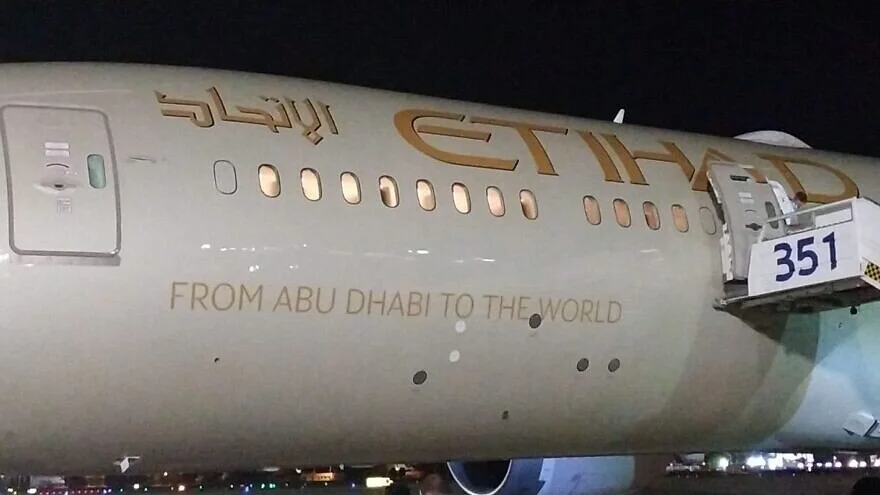
An Etihad Airways cargo plane from the United Arab Emirates landed in Israel on Tuesday evening, said Israel’s foreign ministry.

“The aid will be transferred to Gaza and the [Palestinian Authority] by the U.N. and COGAT,” the foreign ministry said in a statement, according to an AP report.

This was the second such flight of aid for the Palestinians sent from the UAE in the past month. All together, nearly 16 tons of goods have been transferred including around 15 ventilators and other protective equipment to help deal with the coronavirus.

There are no official relations between the UAE and Israel, though the countries have quiet ties and are united with other Gulf states against the Iranian threat.

Meanwhile, Palestinian Authority Prime Minister Mohammad Shtayyeh stated that he was unaware of the flight.

Read More: JNS

Comment

Comment

Israeli tech helps Guatemala cope following Tropical Storm Amanda

AMANDA.png

Israeli technology has been on the forefront of helping Guatemalans recover from Tropical Storm Amanda, which struck the Central American country on in late May. The GEN-M, an atmospheric fresh water generator that makes water out of air, has been helping residents of Guatemala cope amid widespread flooding and destruction in the region, according to a press release from the Israel-based manufacturers Watergen.

The GEN-M was recently presented at a special ceremony last Friday that featured Guatemalan President Alejandro Giammattei, and will be used by The National Coordination for Disaster Reduction of Guatemala now and in future crises. Generating up to 800 liters of water per day with a weight of just 780 kilograms, the GEN-M is transportable and easily installed. Each unit contains an internal water treatment system which with the exception of electricity,  does not need additional infrastructure to operate.

The decision to use Watergen's GEN-M came after President Giammatei visited Watergen's offices in Israel earlier this year, who saw great potential in the technology for solving some of the Guatemala's pressing issues of water shortages. 

The advent of GEN-M will allow Guatemala City increase its water production to meet the current demand of 6.5 cubic meters per second, with the capital city only producing 4 cubic meters per second between 2018 and 2019, well below demand. 

Experts estimate that 20% among Guatemala’s population of 16 million have difficult accessing safe-drinking water. 

Read More: Jerusalem Post

Comment