Comment

Making friends while racing with ‘the other’ in Jerusalem

runnersbordersboys-1168x657.jpg

By Abigail Klein Leichman - May 17, 2018

Originally appeared here in Israel21c

Philip, like many of the teens involved in Arab and Jewish Jerusalem running group Runners Without Borders, doesn’t know enough Arabic to converse with his counterparts from Arab neighborhoods. But as a recent Russian immigrant, he barely speaks Hebrew either.

While running through Jerusalem’s Liberty Bell and Mesila parks for training once a week, Philip nevertheless has made friends.

“He found common ground with both sides, communicating with signals and a few words as they run together,” says Israel Haas, cofounder of RWB, which encourages Jewish and Arab residents of the city to meet, interact and cooperate through athletics.

Haas recalls that when some of RWB’s youth runners participated in the London Marathon in April 2017, Philip spent his free time in the city’s Arab Quarter with his friends from East Jerusalem.

RWB was formed in November 2014 in response to a tense year punctuated by racial violence and war. Haas was organizing a mixed boys running group and Shoshana Ben-David was separately organizing a mixed girls running group.

“We did not know each other and we were connected by some friends,” Haas explains. “We decided to join forces and establish an NGO.” They engaged a Jewish coordinator and an Arab coordinator in addition to professional running coaches.

From the very beginning, Haas felt that typical Arab-Jewish coexistence efforts based on the Western emphasis on dialogue don’t take into account the Middle Eastern mindset and are therefore of limited value.

“When you want to bridge between two sides you can’t use the tools of one side and not the other. That’s why Shoshana and I chose sports, and specifically running, because we both are runners and we know it’s a very easy platform. In football or basketball you need to communicate in a common language but in running you just run together and everybody is equal.” Read More

Comment

Comment

Cheering Israel’s 70th, descendants of Nazis march in Jerusalem

(Photo: Yonatan Sindel/Flash90)

(Photo: Yonatan Sindel/Flash90)

By Marissa Newman - May 16, 2018

Originally appeared here in the Times of Israel 

They came from over 40 countries — from Australia to Burundi, China to South Africa, the United States to Germany — to celebrate Israel’s 70th birthday, filling the streets of Jerusalem on Tuesday with a sea of billowing flags, ecstatic chants of “Israel, Israel” and heartfelt, if often bungled, Hebrew lyrics.

At the March of Nations’ starting point in Sacher Park, a pair of beaming Poles proudly sported Star of David crowns, blue-and-white balloons strong-armed into the shape. Across the grassy expanse, an effusive Hasid was on a rock, welcoming the 2,000-odd international marchers to the city. And on the steep incline of Bezalel Street, hugging the capital’s trendy Nachlaot neighborhood, a middle-aged German violinist in a flat cap was serenading an Israeli baby in the arms of a woman in loose-fitting clothing on the sidelines.

Minutes later, the exuberant crowds filed past a barbershop in downtown Jerusalem, where an Israeli woman paused mid-haircut — her grey hair plastered to her face — to snake a smartphone through her cape and snap a photo through the glass. Past Hillel Street, a lanky Spaniard carrying a shofar high-fived an Israeli over his country’s soccer prowess, as several American nuns forged ahead behind a gray-bearded man with an eye patch and binoculars.

Nearby, a handful of IDF soldiers were showered with attention by the marchers.

But while visually reminiscent of the annual international pro-Israel march on the Sukkot festival, Tuesday’s March of the Nations had an under-the-radar twist missed by most casual Israeli observers.

“My grandfather went to Auschwitz and helped build the concentration camp. He was responsible for putting 16 kilometers of barbed wire into place and he also helped build the gas chambers,” Bärbel Pfeiffer, flanked by her husband and children, told the crowd in German before the march.

“And we are standing here today as a whole family to say that something like this must never happen again. And Israel, we stand by your side and we love you, Israel, and we will be with you.” Read More

Comment

Comment

Does This 3,000-Year-Old House Confirm King David's Lost Biblical Kingdom?

(Photo: Griffin Aerial Imaging)

(Photo: Griffin Aerial Imaging)

By Owen Jarus - May 3, 2018

Originally appeared here in Live Science 

Archaeologists have discovered a sprawling, possibly 3,000-year-old house that suggests a biblical kingdom called the United Monarchy, ruled by King David and later Solomon according to the Hebrew Bible, actually existed.

The archaeologists who excavated the house, at a site now called Tel Eton, in Israel, said in an article published online March 13 in the journal Radiocarbon that the date, design and size of the house indicates that a strong organized government existed at Tel Eton around 3,000 years ago. They added that this government may be the United Monarchy.  The site is located in the central part of Israel in a region called the Shephalah.

The Hebrew Bible states that the United Monarchy collapsed after the death of King Solomon (an event some historians believe occurred around 930 B.C.). After that collapse, two rival Jewish kingdoms popped into existence — Judah (based around Jerusalem), and a kingdom to the north of Jerusalem that retained the name Israel. Read More

Comment

Comment

US Embassy move to Jerusalem becomes official today

(Photo: Yontan Sindel/FLASH90)

(Photo: Yontan Sindel/FLASH90)

By Israel21c Staff - May 14, 2018

Originally appeared here in Israel21c

Declaring “a historic day for our people and for our state,” Prime Minister Benjamin Netanyahu welcomed a US delegation to the Foreign Ministry in Jerusalem on Sunday, ahead of this afternoon’s ceremonial move of the US Embassy from Tel Aviv to Jerusalem.

“President Trump’s decision to move the embassy to Jerusalem affirms a great and simple truth: Jerusalem has been the capital of the Jewish people for the past 3,000 years. It’s been the capital of our state for the past 70 years. It will remain our capital for all time,” said Netanyahu, acknowledging US Ambassador to Israel David Friedman’s role in the process of moving the embassy to Jerusalem. Read more


Comment

Comment

Rare coin from ancient Jewish Bar Kokhba revolt discovered in cave

(Photo: Cogat Spokesman)

(Photo: Cogat Spokesman)

By Juliane Helmhold - May 3, 2018 

Originally appeared here in the Jerusalem Post

A rare coin from the Bar Kokhba revolt was discovered in the Qibya cave, 30 km northwest of Ramallah, the Coordination of Government Activities in the Territories announced Thursday.

The coin is believed to have been minted between the third and fourth year of the Bar Kokhba revolt (136-134 CE).

One side of the coin shows a palm tree with seven fronds and two clusters of fruit, as well as the inscription “Shim[on].” The other side portrays vine leaves with three lobes and the inscription, “To the freedom of Jerusalem.” Read More


Comment

Comment

Tanzania farm for at-risk youth modeled on Israeli program

kaimatanz-2.jpg

By Abigail Klein Leichman - April 30, 2018

Originally appeared here in Israel21c

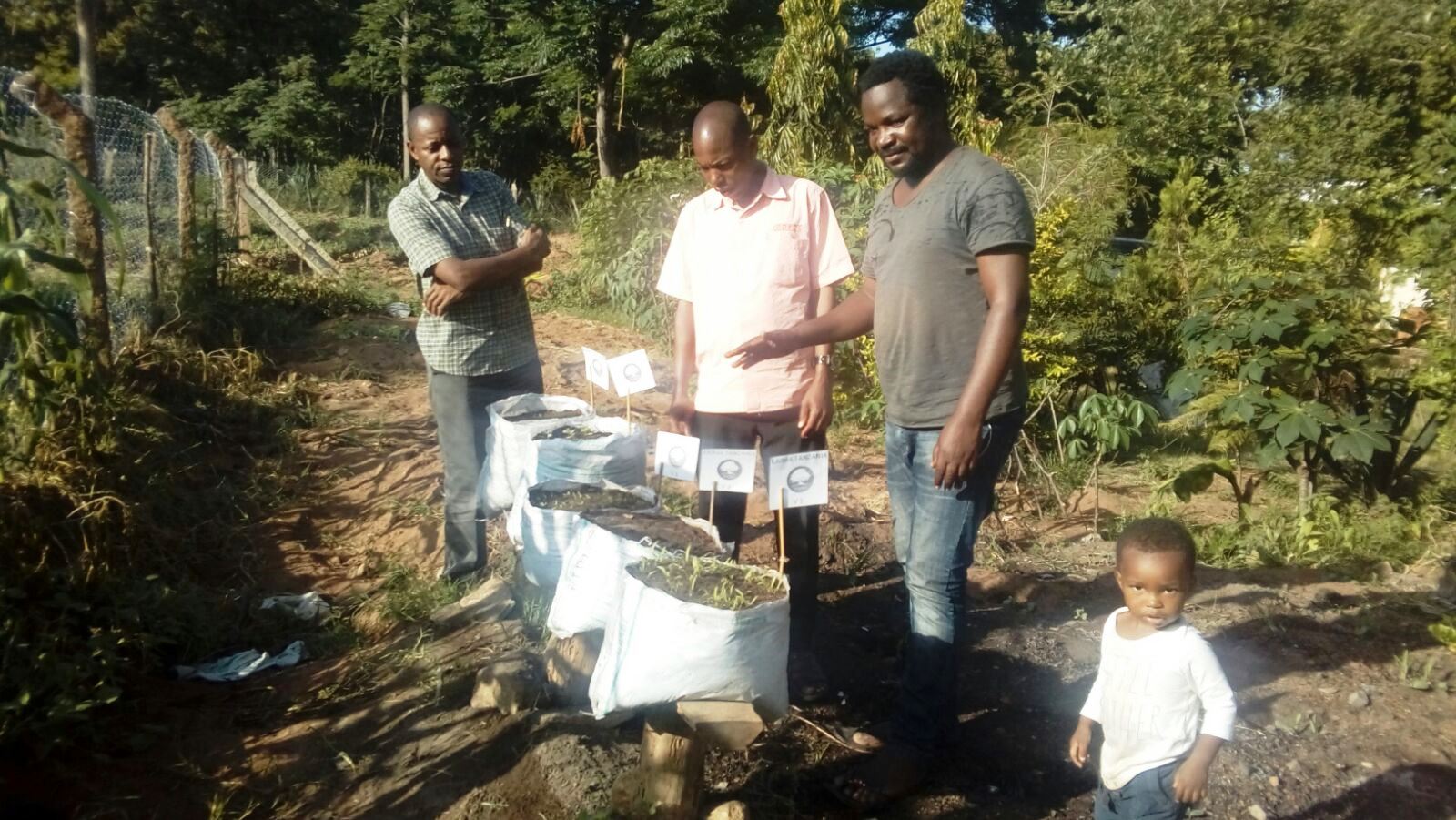
When Tanzanian community developer and environmentalist Fabian Bulugu began a master’s degree program at the Hebrew University of Jerusalem in 2017, he wanted to spend his spare time learning how Israelis work their magic in the desert soil.

“I was very interested in agriculture because Israelis came to Tanzania in the 1960s to help us grow crops at Lake Victoria with Israeli irrigation technologies,” he explains to ISRAEL21c. “I visited those sites and the farmers are still thankful to the Israeli people to this day.”

He heard about a hydroponic gardening project at the Jerusalem Botanical Gardens run by Kaima, an organization that uses organic farming to give Israeli high-school dropouts an income and a fresh start on life.

“It amazed me to see how engaged the youth were,” Bulugu tells ISRAEL21c.

He began volunteering there once a week and then at Kaima Beit Zayit, the flagship farm of the NGO, which now encompasses four “sister” farms in other Israeli locales. “With my interest in climate change and in youth empowerment I felt I needed to do something to help youth,” he said. Read More


Comment

Comment

Israel earmarks NIS 20 million for new tech parks in Arab towns

Moona-featured-2-640x400.jpg

By Shoshanna Solomon - April 26, 2018

Originally appeared here in the Times of Israel 

The Knesset committee for Arab affairs this week approved a NIS 20 million ($5.6 million) two-year plan for the creation of technology parks within Arab towns in Israel, as a way to boost local employment opportunities locally and close income gaps between Jewish and Arab Israelis.

A further NIS 5 million was earmarked to create access roads and transportation to and from these parks. The committee instructed the Ministry of Economy and Industry to set up the plan within 90 days. Read More


Comment

Comment

With Jews largely gone from Iraq, memories survive in Israel

(Photo: REUTERS/Amir Cohen)

(Photo: REUTERS/Amir Cohen)

By Maher Chmaytelli, Jeffrey Heller, Stephen Farrell - April 18, 2018

Originally appeared here in Reuters

BAGHDAD/JERUSALEM (Reuters) - Behind the high concrete walls of Baghdad’s Jewish cemetery, Violette Saul lies at rest under a weathered and cracked tombstone, one of the last memorials to an ancient community that is now all but extinct.

The Iraqi nurse was buried a decade ago alongside thousands of others in the sands of a country where her community thrived for more than 2,500 years.

Drive west to the shores of the Mediterranean - just a day’s journey geographically but a world away politically - and there is a lament inscribed at the entrance to the Babylonian Jewry Heritage Centre in Israel - “The Jewish community in Iraq is no more”.

It is no accident that such a somber epitaph to Iraq’s Jews should be found in Israel, where tens of thousands of them fled after 1948 amid the violent spasms that accompanied the birth of that state.

That transplanting of an educated, vibrant and creative community unquestionably enriched Israel, which celebrates its 70th anniversary on Wednesday.

But it also denuded Iraq of a minority that had long contributed to its political, economic and cultural identity. Read More


Comment

Comment

Police to wipe clean 339,000 records in 70th Independence Day gesture

(Photo: Yonatan Sindel/Flash90)

(Photo: Yonatan Sindel/Flash90)

By Stuart Winer - April 17, 2018

Originally appeared here in the Times of Israel

The Israel Police will wipe clean hundreds of thousands of police records in a goodwill gesture to mark the country’s 70th Independence Day.

Under the initiative, some 339,000 closed files relating to 300,000 Israeli citizens, regional citizens, foreigners, and tourists, will be deleted, among them cases involving 34,000 minors, police said in a statement.

“Even regular citizens commit offenses and break the law, but that doesn’t mean we should label them as criminals,” Commissioner Roni Alsheich told a press conference Tuesday at police headquarters in Jerusalem.

“It is in the interest of society to not label them as criminals as much as possible and to enable them to return to the pool of regular citizens.”

The clean sweep, titled “A New Chance,” will only be applied to closed cases involving misdemeanors committed five years previously or criminal offenses committed seven years previously, and that did not lead to an indictment. Alsheich said the plan is part of a reform aimed at building public faith in the force. Read More

Comment

Comment

Fall from window turns tragedy into coexistence triumph

Naeem-AlBayda-and-patient.jpg

By Abigail Klein Leichman - April 17, 2018

Originally appeared here in Israel21c 

In 2012, four-year-old Rozana Salawhi fell from the ninth floor of her family’s apartment in a village near Ramallah, the seat of the Palestinian Authority.

Her mother, journalist Maysa Abu Ghannam, insisted that the child be taken to Hadassah Medical Center in Jerusalem because she knew its expertise in pediatric emergency care greatly surpassed that of the local hospital. This decision most likely saved Rozana’s life.

Half a world away, Hadassah Australia President Ron Finkel watched a video about Rozana’s story and was inspired to use this incident as the basis for a new bridge of understanding by sharing medical expertise between Israelis and Palestinians.

Having lived in Israel for nine years, he knew healthcare is a key sector for engagement.

“In healthcare, every minute of every day Palestinians and Israelis interact in a significant way. A hundred thousand permits are given annually to Palestinians to access treatment in Israeli hospitals,” Finkel tells ISRAEL21c.

And he knew that Israelis were willing to work with equally willing Arab colleagues to improve the standard of care in PA-administered territories and Gaza. Read More

Comment

Comment

Israel, Africa, and Black America

Screen Shot 2018-04-16 at 1.02.22 PM.png

By Joshua Washington - April 13, 2018

Originally appeared here in the Times of Israel 

All over the world, moviegoers are raving about the recently released and now one of the world’s top grossing films, Black Panther; not just because of the movie itself or what it means for the Marvel Cinematic Universe, but because of what such a movie represents and how it is shaping a lot of conversations surrounding identity and justice. I personally, as a lot of Black Panther fans, have been thoroughly enjoying interviews of cast members and play-by-play breakdowns by director, Ryan Coogler to get as much insight on the film as possible; everything from the relationships on set, to the symbolism of each scene, to what the movie means for the overall storyline in the MCU. My personal favorite is watching the cast members talk about their favorite moments on set. In the clip, Lupita Nyong’o describes what she very excitedly calls “Pan-Africa.” Nyong’o, along with the rest of the Black Panther cast describe their experience making the movie as something of a glimpse of what a true bridge between Africa and the African Diaspora looks like. The movie for me highlights a conversation that so desperately needs to take place; not one that is black and white, but one that is black Africa and black America.

Generally speaking, the black Africa/black America conversation until now has either been superficial, non-existent, or contentious. In the ’80s and ’90s, the term “African Booty Scratcher” became a popular term that was used to describe black Africans living in America, and most often by black Americans. Conversely, black Africans living in America would tend to use the word “Akata” (a term loosely meaning “wandering cat” or “wandering jackal”) when referring to black Americans. Because of this tension that existed between the adults, the effects were felt the most by the children growing up in shared environments like grade school, for example. This has led to what we have seen more recently in college spaces like Cornell University. In September 2017, Cornell University’s Black Students United demanded for Cornell University to admit less African and Caribbean students and admit more black Americans which, as defined by them, are black people who have been in the U.S. for two or more generations. Now, Black Student’s United has since apologized for those demands, which is all well and good, but we are still left with many questions, none of which can be answered without meaningful interaction between the estranged siblings.

Beneath the T’Challa vs. Killmonger debate are very rich, meaningful, and nuanced dialogue being had between us and our African brothers and sisters, which is a very good thing, but only the beginning to what could be something beautiful and redemptive. The next step is black Americans touring, frequenting, and living life in countries in Africa, but more specifically, in our countries of origin.  Nigerian-American rap artist, Jidenna is another prominent figure in the celebrity space that has been using his platform to advocate for black Americans to have free access to ancestry tracing. Jidenna states that, like Jewish Americans, black Americans need to have what is essentially birthright; a free trip to our country of origin to get a deeper understanding of our roots and strengthen our sense of identity. Jidenna goes on to state passionately that as black Americans, some of the issues we face as a community cannot be overcome by just us, and that we can overcome them with help and resources from other parts of the world, namely Africa. His vision is to fund this project with other affluent singers, athletes, and entrepreneurs. As someone who is deeply rooted in his Igbo roots, being a child of both Africa and America, he sees the grave importance and vast potential of black Americans not only knowing, and not even putting stereotypes to rest, but having a real physical and emotional connection to and relationship with the continent and its heritage.

The only way a community, a family or individual knows how to move forward, is if they know from where it is they came. Black Americans have a rich history of encountering impossible hurdles, facing impossible circumstances, and overcoming. Our story is one of triumph. Our legacy is Frederick Douglass, born a slave who could not read until the age of 12, died a one of the greatest minds in American history, having advised two of our presidents, played a pivotal role in abolishing slavery, and beginning the fight for black voting rights. Our legacy is Booker T. Washington, from slavery to once again, advising two of our presidents, and together with Jewish businessman Julius Rosenwald built thousands of schools for black children in the segregated south. The story of black America is the story of the impossible. We can and will never learn enough about our American journey. However, our journey stretches a lot further back than the soil we stand on now. It stretches back for hundreds and even thousands of additional years, and we need to know that journey just as sorely as the one with which we are more familiar. And until fairly recently, because of lost or destroyed slave records, we had a very general if any understanding that we came from “Africa.” We have the tools now to find out from exactly who our people were, who they are, what customs they held, what other adversities they faced, and how they fair today. It is more than fascinating, it is our identity. It is the very fabric of who we truly are. And for an individual who knows who they are, virtually nothing that can stand in their way from changing the world for the better.

What does any of this have to do with Israel? Read More

 

Comment

Comment

Israeli scientist working on Alzheimer’s vaccine

Screen Shot 2018-04-16 at 12.45.14 PM.png

By Abigail Klein Leichman - April 16, 2018

Originally appeared here in Israel21c  

Alzheimer’s disease, affecting some 47 million people worldwide, for now remains an irreversible and fatal brain disorder. Taking a proactive approach, an Israeli brain researcher is developing a vaccine against this devastating disease.

Most vaccines work by mounting an immune response toward a weakened pathogen to boost the immune system’s ability to fight the real pathogen. Prof. Eitan Okun’s vaccine primes the body to attack amyloid beta protein accumulations in the brain, one of the signature signs of Alzheimer’s disease.

Experiments on mice in Okun’s Paul E. Feder Alzheimer’s Research Lab at Bar-Ilan University in Ramat Gan reportedly have shown great promise.

He is now preparing to design human trials on people at known risk of developing the disease in their 50s or younger: those genetically inclined toward Alzheimer’s and people with Down syndrome. Read More

Comment

Comment

Holocaust study: Two-thirds of millennials don’t know what Auschwitz is

(Photo: Czarek Sokolowski/AP)

(Photo: Czarek Sokolowski/AP)

By Julie Zauzmer - April 12, 2018

Originally appeared here in The Washington Post

Two-thirds of American millennials cannot identify what Auschwitz is, according to a study released on Holocaust Remembrance Day that found that knowledge of the genocide that killed 6 million Jews during World War II is rapidly fading among American adults, especially those ages 18 to 34.

Twenty-two percent of millennials said they haven’t heard of the Holocaust or are not sure whether they’ve heard of it — twice the percentage of U.S. adults as a whole who said the same. Read More

Comment

Comment

To Life: How Israeli Volunteers are Changing the World

(Photo: CBN.com)

(Photo: CBN.com)

By CBN.com - Originally appeared here

Watch The 700 Club, April 16-20, 2018, for a very special week of programming featuring CBN’s latest documentary release To Life: How Israeli Volunteers are Changing the World.

The documentary series of short films comes from the creators of In Our Hands and shows viewers a side of Israel they haven’t seen before. Watch as five Israeli organizations make a difference in the daily lives of the people they encounter—including their enemies. Read More

Comment

Comment

'From Holocaust to Redemption,' Rivlin to Lead 30th March of the Living

(photo: Yossi Zeliger)  

(photo: Yossi Zeliger)  

By Steve Linde - April 8, 2018

Originally appeared here in the Jerusalem Post

President Reuven Rivlin will lead the International March of the Living procession in Poland this year as the organization marks its 30th anniversary under the theme, “From Holocaust to Redemption.”

Among the more than 12,000 participants from around the world expected to march the 3.2-km. (2-mile) path from Auschwitz to Birkenau on Holocaust Martyrs’ and Heroes’ Remembrance Day on April 12, a week before Israel’s 70th anniversary, will be Yad Vashem Council chairman Rabbi Yisrael Meir Lau and the heads of all Israel’s security forces – the IDF, the Israel Police, the Mossad and Shin Bet (Israel Security Agency).

“Every facet of this march is historic,” Rivlin said. Read More


Comment

Comment

Soccer club shoots for tolerance in fractious Jerusalem

(Photo: AFP / Menahem Kahana) 

(Photo: AFP / Menahem Kahana) 

By Michael Blum - April 9, 2018

Originally appeared here in the Times of Israel

AFP — For one Jerusalem football club, the goal of tolerance in a city often in the grip of conflict is still worth a shot.

More than a decade after its formation, Jerusalem’s Hapoel Katamon football club is making a name for itself on the field but also for its approach and youth programs to bring together Israelis and Palestinians.

It is a fan-owned league club and has pursued programs such as tournaments for Jewish and Arab youth with the help of philanthropic organizations. Read More


Comment

Comment

In first, Israeli drivers participate in UAE off-road race

1600px_x_900_px_-_israel21c_11.jpg

By Rebecca Stadlen Amir - April 5, 2018

Originally appeared here in Israel21c

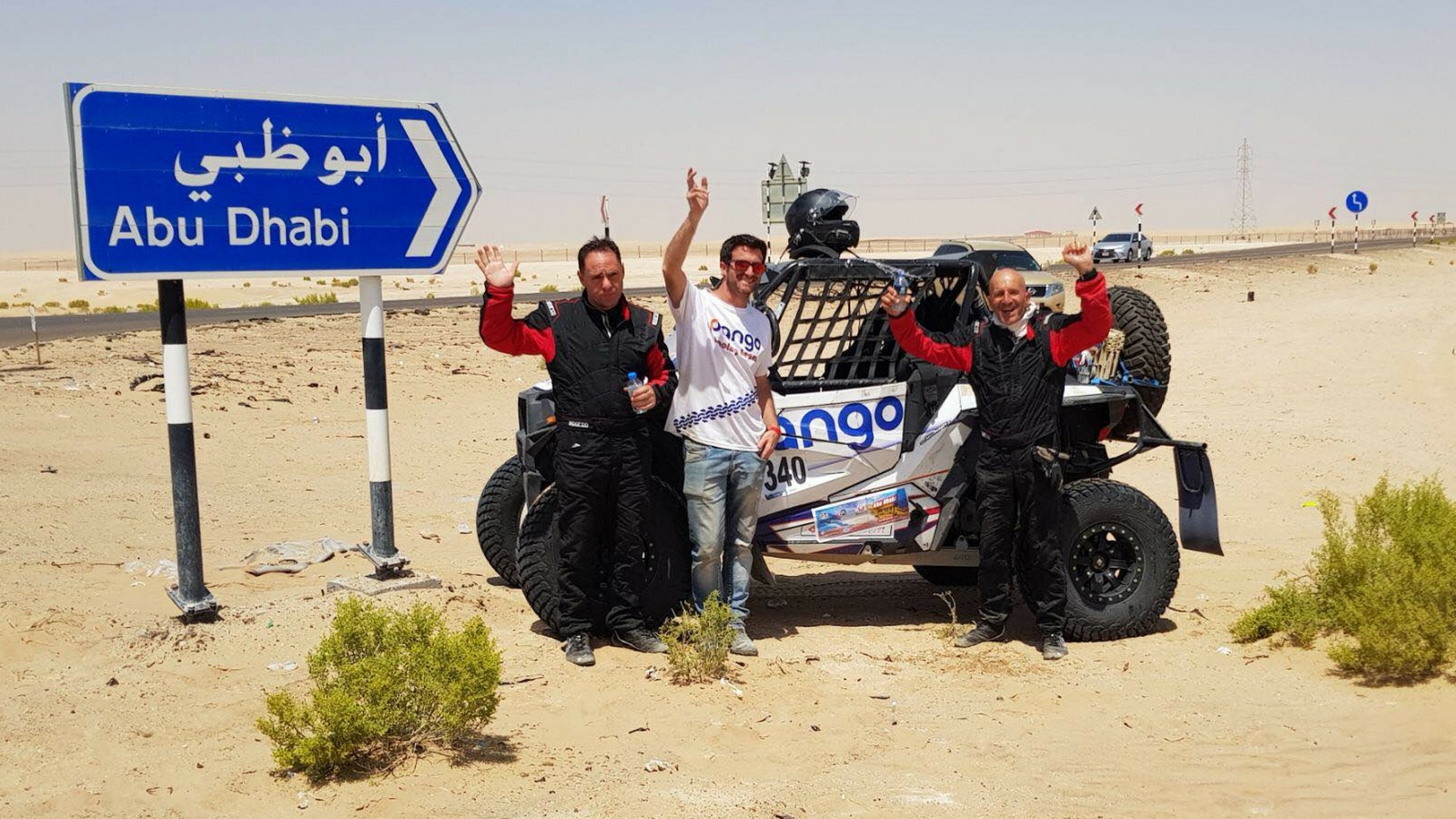
While most of Israel was preparing for the Passover holiday, Israeli drivers Dani Pearl and Itai Moldavski landed in the United Arab Emirates (UAE) to participate in the Abu Dhabi Desert Challenge off-road race.

The pair was the first team from Israel ever to compete in the race, one of the world’s most prestigious international cross-country rallies, March 24-29.

Though Israel does not have open diplomatic relations with the UAE, ties between Israel and the Arab Gulf states have seemed to warm up in recent weeks. Several days before the race, a flight headed to Israel passed over Saudi airspace for the first time in history.

Pearl and Moldavski, members of the Pearl Pango Racing Team, received an official invitation from the supervisors of the Desert Challenge and entered the UAE with Israeli passports. Read More


Comment

Comment

Israel Hosts UN Water Solutions Event

(Photo: ISRAEL AT THE UN)

(Photo: ISRAEL AT THE UN)

By Daniel J. Roth - March 23, 2018

Originally appeared here in the Jerusalem Post

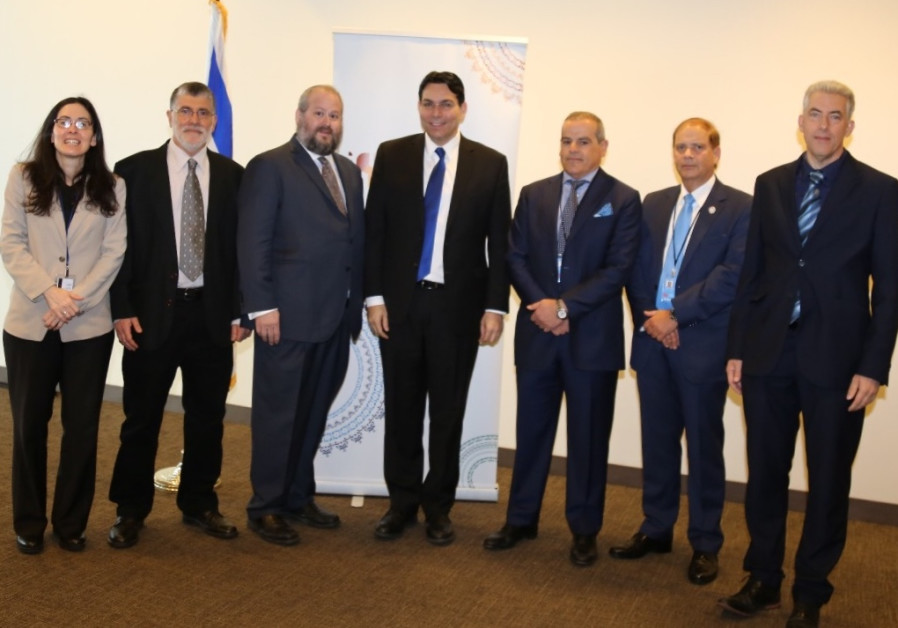
LOS ANGELES - A special forum presenting the latest water solutions from the public and private sectors in Israel was hosted by Israeli Ambassador to the United Nations Danny Danon on Thursday to mark International Water Day. 

The event, organized by Israel’s Mission to the UN and MASHAV - Israel's Agency for International Development Cooperation, presented examples of Israeli water technology used in more than 100 countries around the world.

“We are proud that Israel provides the world with cutting-edge innovations for integrated water management,” Danon said in his opening remarks.  

“We have an opportunity and a responsibility to guarantee water security for everyone,” he added. Read More

Comment

Comment

Saudi crown prince recognizes Israel’s right to exist, talks up future ties

(Photo: AFP PHOTO / Bryan R. Smith)

(Photo: AFP PHOTO / Bryan R. Smith)

By TOI Staff - April 2, 2018

Originally appeared here in the Times of Israel 

Saudi Crown Prince Mohammed bin Salman, in an interview published Monday, recognized Israel’s right to exist and extolled the prospect of future diplomatic relations between his kingdom and the Jewish state.

In an extensive interview with The Atlantic’s Jeffrey Goldberg, Prince Mohammed laid out his vision for the future of the Middle East, including the possibility of cooperation with Israel.

Asked whether he believes “the Jewish people have a right to a nation-state in at least part of their ancestral homeland,” he replied: “I believe that each people, anywhere, has a right to live in their peaceful nation. I believe the Palestinians and the Israelis have the right to have their own land.” Read More

Comment

Comment

Pilgrims Flock to Jerusalem to Celebrate Easter

evt-easter-6.jpg

By Reuters - April 1, 2018

Originally appeared here in the Jerusalem Post 

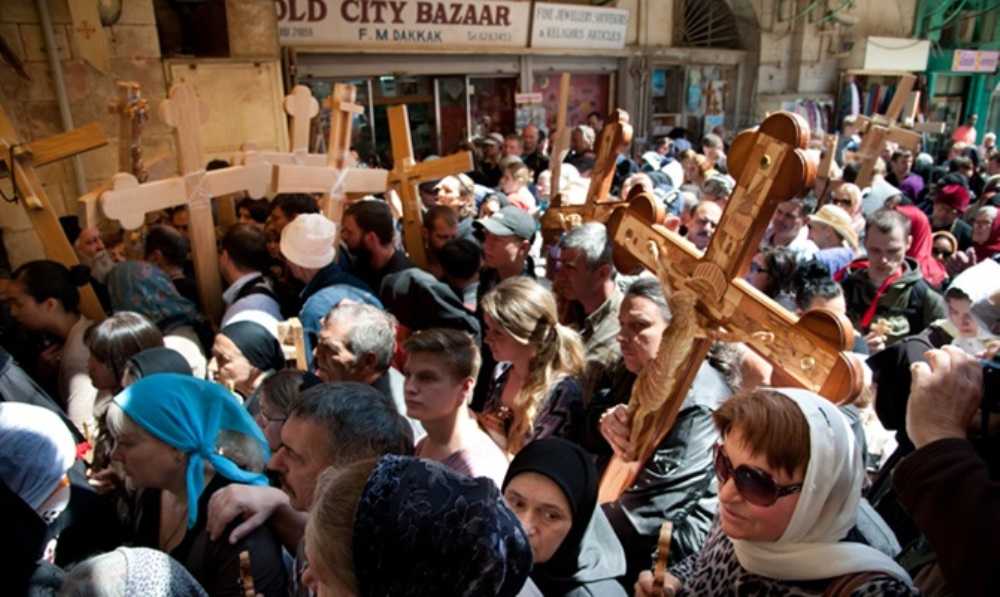
Christians marked Easter Sunday with a mass led by the acting Latin Patriarch of Jerusalem Pierbattista Pizzaballa, at Jerusalem's Church of the Holy Sepulchre.

Hundreds of pilgrims came to the church in the Old City, for a mass to mark the resurrection of Jesus Christ. Many Christians believe Jesus's body was buried at what became the site of the Church of the Holy Sepulchre.

The congregation in the church sang hymns during the celebration. The Easter week culminates on Easter Sunday when Christians believe Jesus rose from the dead, three days after being crucified.

Shortly after the service ended hundreds of Orthodox Christians arrived at the church for a Palm Sunday service, to mark the beginning of their Easter week festivities. The worshipers entered the church waving palm fronds and branches. The service was led by the Greek Orthodox Patriarch of Jerusalem Theophilos III. Read More

Comment